Tag: Başlangıç Seviyesi İngilizce

  • Komik Bir Hata

    Komik Bir Hata

    Hikayemizin sesli haline Youtube Kanalından ya da Spotify’dan ulaşabilirsiniz.

    A Funny Mistake! – Komik Bir Hata! 🧳

    Bu A1 seviye İngilizce hikâyede Deniz’in tatilde yaşadığı komik bir valiz karışıklığını okuyacaksınız. Hikâyenin ardından tatil ve seyahat kelimelerini çalışabilir, Simple Past Tense (Geçmiş Zaman) alıştırmalarıyla öğrendiklerinizi pekiştirebilirsiniz.

    📖 İngilizce Hikâye

    A Funny Mistake!

    My name is Deniz. Last Friday, I went to Antalya for a short holiday. I packed my clothes, my swimsuit, and my favorite book in a black suitcase.

    After my flight, I got on a small hotel bus. There were six other people on the bus. I sat by the window and looked at the sea.

    We arrived at the hotel at three o’clock. I took a black suitcase from the bus and went to my room.

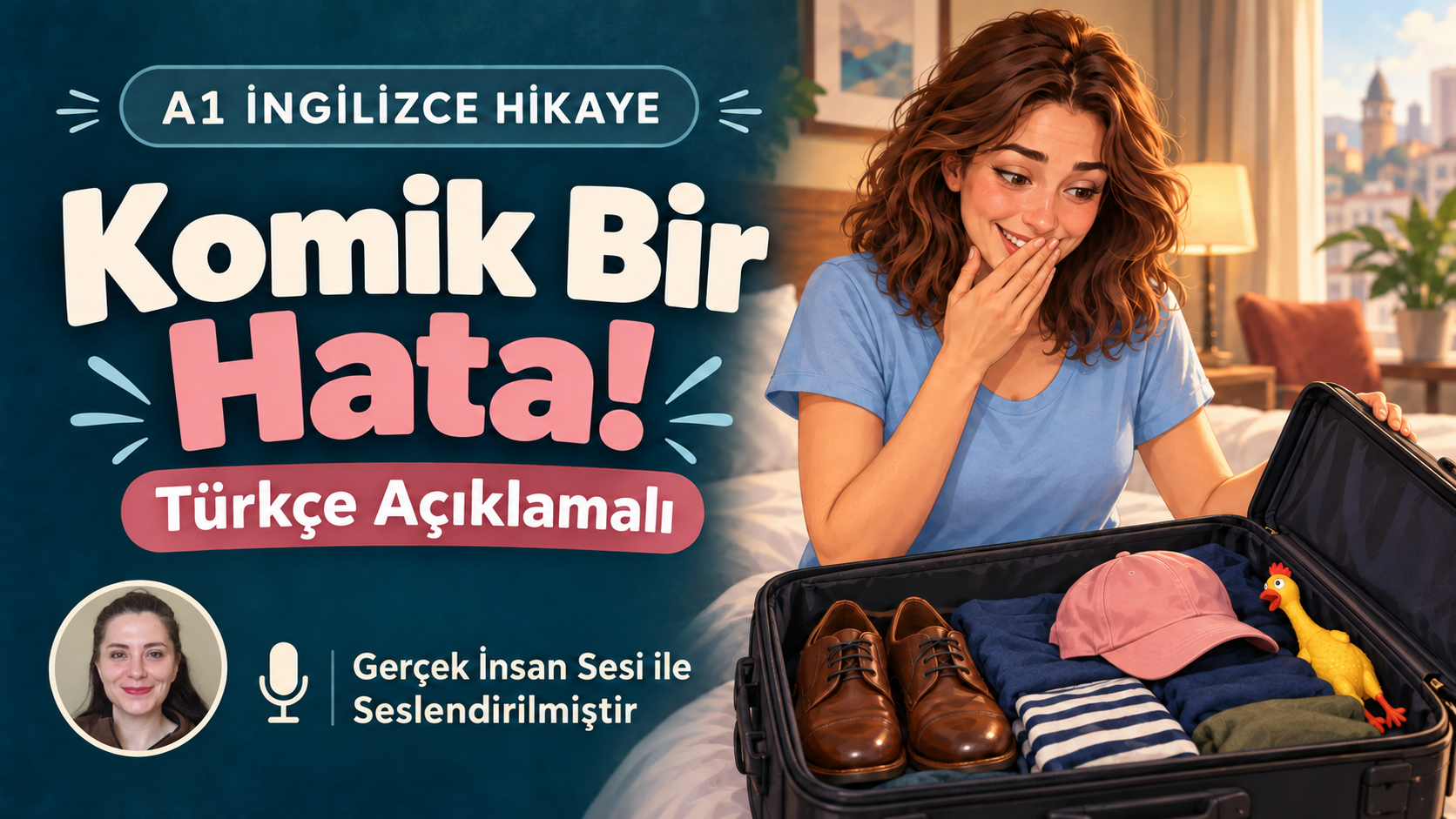
    I wanted to change my clothes and go to the beach. But when I opened the suitcase, I stopped. Inside, there were two very big shoes, a pink hat, and a yellow toy chicken.

    I looked at the shoes.

    “These aren’t mine!”

    Then I picked up the chicken. It made a loud noise. I almost dropped it.

    There were no swimsuits or books in the suitcase. Under the hat, I found a small card. There was a name on it.

    “Oh, no. I took the wrong suitcase!”

    I closed it and called reception.

    “Hello. My name is Deniz. I’m in room 204. I have another person’s suitcase.”

    “Is it black?” the receptionist asked.

    “Yes, it is.”

    “Please bring it downstairs. A man is here with your suitcase.”

    I went downstairs quickly. A tall man stood next to reception. My suitcase was beside him.

    “I’m very sorry,” I said. “Did you open my suitcase?”

    “Yes,” he said. “I found a swimsuit and a book. But I didn’t find my chicken.”

    We both laughed.

    “Why do you have a toy chicken?” I asked.

    “I work here,” he explained. “I play games with the children and make them laugh. The chicken helps me.”

    We checked the names and took our own suitcases.

    The next morning, I saw him near the pool. He wore his pink hat and big shoes. Some children laughed and waved at him.

    Then I heard that chicken again. This time, I didn’t jump. I smiled and waved, too.


    🇹🇷 Türkçe Çevirisi

    Komik Bir Hata!

    Benim adım Deniz. Geçen cuma kısa bir tatil için Antalya’ya gittim. Kıyafetlerimi, mayomu ve en sevdiğim kitabı siyah bir valize koydum.

    Uçuşumdan sonra küçük bir otel otobüsüne bindim. Otobüste altı kişi daha vardı. Cam kenarına oturdum ve denize baktım.

    Saat üçte otele vardık. Otobüsten siyah bir valiz aldım ve odama gittim.

    Kıyafetlerimi değiştirip plaja gitmek istedim. Ama valizi açınca durdum. İçinde çok büyük iki ayakkabı, pembe bir şapka ve sarı bir oyuncak tavuk vardı.

    Ayakkabılara baktım.

    “Bunlar benim değil!”

    Sonra tavuğu elime aldım. Yüksek bir ses çıkardı. Neredeyse onu düşürüyordum.

    Valizde mayo ya da kitap yoktu. Şapkanın altında küçük bir kart buldum. Üzerinde bir isim vardı.

    “Eyvah. Yanlış valizi aldım!”

    Valizi kapattım ve resepsiyonu aradım.

    “Merhaba. Benim adım Deniz. 204 numaralı odadayım. Başka birinin valizi bende.”

    “Siyah mı?” diye sordu resepsiyon görevlisi.

    “Evet, siyah.”

    “Lütfen onu aşağıya getirin. Burada bir adam var. Sizin valiziniz onda.”

    Hızlıca aşağıya indim. Resepsiyonun yanında uzun boylu bir adam duruyordu. Valizim onun yanındaydı.

    “Çok özür dilerim,” dedim. “Valizimi açtınız mı?”

    “Evet,” dedi. “Bir mayo ve bir kitap buldum. Ama tavuğumu bulamadım.”

    İkimiz de güldük.

    “Neden oyuncak bir tavuğunuz var?” diye sordum.

    “Ben burada çalışıyorum,” diye açıkladı. “Çocuklarla oyunlar oynuyorum ve onları güldürüyorum. Tavuk bana yardım ediyor.”

    İsimleri kontrol ettik ve kendi valizlerimizi aldık.

    Ertesi sabah onu havuzun yakınında gördüm. Pembe şapkasını ve büyük ayakkabılarını giymişti. Birkaç çocuk güldü ve ona el salladı.

    Sonra o tavuğun sesini tekrar duydum. Bu sefer irkilmedim. Ben de gülümsedim ve el salladım.


    📚 Önemli Kelimeler ve İfadeler

    İngilizceTürkçe
    suitcasevaliz
    holidaytatil
    flightuçuş
    swimsuitmayo
    clotheskıyafetler
    beachplaj
    toy chickenoyuncak tavuk
    hatşapka
    receptionresepsiyon
    receptionistresepsiyon görevlisi
    downstairsaşağıya, alt kata
    poolhavuz
    wrongyanlış
    loud noiseyüksek ses
    by the windowcam kenarında
    next to / besideyanında
    pick upeline almak, yerden almak
    change my clotheskıyafetlerimi değiştirmek
    make them laughonları güldürmek
    our own suitcaseskendi valizlerimiz

    🔄 Hikâyedeki Düzensiz Fiiller

    Fiilin yalın hâliGeçmiş zaman hâliTürkçe anlamı
    gowentgitmek
    get ongot onbinmek
    sitsatoturmak
    taketookalmak
    makemadeyapmak; ses çıkarmak
    findfoundbulmak
    standstoodayakta durmak
    saysaidsöylemek
    seesawgörmek
    wearworegiymek, takmak
    hearheardduymak

    💡 Kısa Gramer Notu: Simple Past Tense

    Geçmişte gerçekleşip bitmiş olayları anlatırken Simple Past Tense kullanırız.

    Olumlu cümlelerde düzenli fiillere -ed eklenir. Düzensiz fiillerin ise geçmiş zaman biçimleri kullanılır.

    • I opened the suitcase. → Valizi açtım.
    • I found a small card. → Küçük bir kart buldum.

    Soru ve olumsuz cümlelerde did / didn’t kullanılır ve asıl fiil yalın hâline döner.

    • Did you open my suitcase? → Valizimi açtınız mı?
    • I didn’t find my chicken. → Tavuğumu bulamadım.

    ✅ I didn’t find my chicken.
    ❌ I didn’t found my chicken.

    “There were” ise geçmişte bir yerde birden fazla kişinin veya nesnenin bulunduğunu belirtir.

    • There were six other people on the bus. → Otobüste altı kişi daha vardı.
    • There was a name on it. → Üzerinde bir isim vardı.

    ✏️ Alıştırma 1: Hikâyeyi Anlama

    Soruları İngilizce kısa cevaplarla yanıtlayın.

    1. Where did Deniz go for her holiday?
    2. What color was the suitcase?
    3. What did Deniz find under the hat?
    4. Did the man find his chicken in Deniz’s suitcase?
    5. Where did Deniz see the man the next morning?

    ✏️ Alıştırma 2: Kelimelerle Boşluk Doldurma

    Her kelimeyi bir kez kullanın.

    Kelimeler: suitcase – flight – downstairs – pool – hat

    1. After my __________, I got on a small hotel bus.
    2. I packed my clothes in a black __________.
    3. Under the __________, I found a small card.
    4. Please bring it __________.
    5. The next morning, I saw him near the __________.

    ✏️ Alıştırma 3: Fiillerin Geçmiş Zaman Hâli

    Parantez içindeki fiilleri Simple Past Tense ile tamamlayın.

    1. Last Friday, Deniz __________ to Antalya. (go)
    2. She __________ the suitcase in her room. (open)
    3. She __________ a small card under the hat. (find)
    4. Deniz and the man both __________. (laugh)
    5. The man __________ his pink hat the next morning. (wear)
    6. Deniz __________ the toy chicken again. (hear)

    ✏️ Alıştırma 4: Hataları Düzeltme

    Aşağıdaki cümlelerde geçmiş zaman kullanımına ilişkin birer hata var. Cümleleri doğru şekilde yeniden yazın.

    1. Did you opened my suitcase?
    2. I didn’t found my chicken.
    3. Deniz go to Antalya last Friday.
    4. There was six other people on the bus.
    5. She didn’t jumped this time.

    ✅ Cevap Anahtarı

    Alıştırma 1

    1. She went to Antalya.
    2. It was black.
    3. She found a small card.
    4. No, he didn’t.
    5. She saw him near the pool.

    Alıştırma 2

    1. flight
    2. suitcase
    3. hat
    4. downstairs
    5. pool

    Alıştırma 3

    1. went
    2. opened
    3. found
    4. laughed
    5. wore
    6. heard

    Alıştırma 4

    1. Did you open my suitcase?
    2. I didn’t find my chicken.
    3. Deniz went to Antalya last Friday.
    4. There were six other people on the bus.
    5. She didn’t jump this time.

    🎧 Dinleyerek Pratik Yapın

    Bu hikâyenin seslendirmesini Kolay İngilizce Hikayeler YouTube kanalında dinleyebilirsiniz. Önce İngilizce dinleyin, ardından Türkçe açıklamalarla kelimeleri ve cümleleri inceleyin. Son olarak altyazısız dinleyerek anlama becerinizi deneyin.

    💬 Sıra sizde: “I went…” ile başlayan, geçmişte yaptığınız bir yolculuğu anlatan İngilizce bir cümle yazın!
  • Ünite 5: Singular and Plural Nouns Konu Anlatımı

    Tekil ve Çoğul İsimler

    İngilizcede tekil ve çoğul isimleri öğrenin. -s, -es, -ies kuralları, düzensiz çoğullar, tablolar ve A1 örnek cümleler.

    İngilizcede bir kişiden, hayvandan, nesneden veya yerden söz ederken isimleri kullanırız.

    Sadece bir tane kişi veya nesneden bahsediyorsak singular noun, yani tekil isim kullanırız. Birden fazla kişi veya nesneden bahsediyorsak plural noun, yani çoğul isim kullanırız.

    Örneğin:

    a book
    bir kitap

    two books
    iki kitap

    İngilizcede isimleri çoğul yapmak için çoğu zaman kelimenin sonuna -s ekleriz. Ancak bazı kelimelerde -es veya -ies kullanmamız gerekir. Bazı isimler ise kurala uymaz ve tamamen değişir.


    1. Singular Noun Nedir?

    Singular noun, tek bir kişi, hayvan, nesne veya yeri anlatan isimdir.

    Türkçede buna tekil isim denir.

    Örnekler

    a student
    bir öğrenci

    a cat
    bir kedi

    a house
    bir ev

    an apple
    bir elma

    a teacher
    bir öğretmen

    Tekil ve sayılabilen isimlerin önünde genellikle a veya an kullanılır.

    Cümle İçinde Örnekler

    There is a book on the table.
    Masanın üzerinde bir kitap var.

    She is a teacher.
    O bir öğretmen.

    I have an apple.
    Bir elmam var.

    The cat is under the chair.
    Kedi sandalyenin altında.


    2. Plural Noun Nedir?

    Plural noun, birden fazla kişi, hayvan, nesne veya yeri anlatan isimdir.

    Türkçede buna çoğul isim denir.

    Örnekler

    students
    öğrenciler

    cats
    kediler

    houses
    evler

    apples
    elmalar

    teachers
    öğretmenler

    Cümle İçinde Örnekler

    There are three books on the table.
    Masanın üzerinde üç kitap var.

    They are teachers.
    Onlar öğretmen.

    I have two apples.
    İki elmam var.

    The cats are under the chair.
    Kediler sandalyenin altında.


    3. Tekil ve Çoğul İsimler Arasındaki Fark

    Tekil isimÇoğul isimTürkçesi
    bookbookskitap / kitaplar
    studentstudentsöğrenci / öğrenciler
    catcatskedi / kediler
    househousesev / evler
    appleappleselma / elmalar

    Kısa Kural

    • Bir tane → singular
    • Birden fazla → plural

    one book
    bir kitap

    two books
    iki kitap


    4. Çoğu İsmin Sonuna -s Eklenir

    İngilizcede çoğu ismi çoğul yapmak için kelimenin sonuna -s ekleriz.

    Formül

    isim + s

    TekilÇoğul
    bookbooks
    carcars
    tabletables
    studentstudents
    teacherteachers
    phonephones

    Örnek Cümleler

    I have one book.
    Bir kitabım var.

    I have three books.
    Üç kitabım var.

    There is a car outside.
    Dışarıda bir araba var.

    There are two cars outside.
    Dışarıda iki araba var.

    The student is in the classroom.
    Öğrenci sınıfta.

    The students are in the classroom.
    Öğrenciler sınıfta.


    5. -s, -ss, -sh, -ch, -x ve -z ile Biten İsimler

    Bir isim -s, -ss, -sh, -ch, -x veya -z ile bitiyorsa çoğul yapmak için genellikle -es ekleriz.

    Formül

    isim + es

    TekilÇoğulTürkçesi
    busbusesotobüsler
    classclassessınıflar
    dishdishestabaklar
    watchwatchessaatler
    boxboxeskutular
    quizquizzeskısa sınavlar

    Örnek Cümleler

    There is a bus at the station.
    İstasyonda bir otobüs var.

    There are three buses at the station.
    İstasyonda üç otobüs var.

    This box is heavy.
    Bu kutu ağır.

    These boxes are heavy.
    Bu kutular ağır.

    She has two watches.
    Onun iki kol saati var.

    The dishes are in the kitchen.
    Tabaklar mutfakta.


    6. Sessiz Harf + Y ile Biten İsimler

    Bir isim sessiz harf ve -y ile bitiyorsa:

    1. y harfi gider.
    2. Yerine -ies gelir.

    Formül

    sessiz harf + y → ies

    TekilÇoğulTürkçesi
    babybabiesbebekler
    citycitiesşehirler
    familyfamiliesaileler
    countrycountriesülkeler
    storystorieshikâyeler
    partypartiespartiler

    Örnekler

    There is a baby in the room.
    Odada bir bebek var.

    There are two babies in the room.
    Odada iki bebek var.

    This city is very crowded.
    Bu şehir çok kalabalık.

    These cities are very crowded.
    Bu şehirler çok kalabalık.

    I read a short story every night.
    Her gece kısa bir hikâye okurum.

    I have many English stories.
    Birçok İngilizce hikâyem var.


    7. Sesli Harf + Y ile Biten İsimler

    Bir isim sesli harf ve -y ile bitiyorsa sadece -s ekleriz.

    Y harfi değişmez.

    TekilÇoğulTürkçesi
    boyboyserkek çocuklar
    daydaysgünler
    keykeysanahtarlar
    toytoysoyuncaklar
    monkeymonkeysmaymunlar

    Örnekler

    The boy is in the garden.
    Erkek çocuk bahçede.

    The boys are in the garden.
    Erkek çocuklar bahçede.

    This is my key.
    Bu benim anahtarım.

    These are my keys.
    Bunlar benim anahtarlarım.

    The child has a toy.
    Çocuğun bir oyuncağı var.

    The children have many toys.
    Çocukların birçok oyuncağı var.


    8. -f ve -fe ile Biten Bazı İsimler

    Bazı -f veya -fe ile biten kelimelerde f/fe gider ve yerine -ves gelir.

    TekilÇoğulTürkçesi
    wifewiveseşler
    knifeknivesbıçaklar
    lifeliveshayatlar
    leafleavesyapraklar
    wolfwolveskurtlar
    shelfshelvesraflar

    Örnekler

    There is a knife on the table.
    Masanın üzerinde bir bıçak var.

    There are two knives on the table.
    Masanın üzerinde iki bıçak var.

    The leaf is yellow.
    Yaprak sarı.

    The leaves are yellow.
    Yapraklar sarı.

    Dikkat

    Her -f ile biten kelime bu kurala uymaz.

    TekilÇoğul
    roofroofs
    chefchefs
    beliefbeliefs

    Bu kelimelere yalnızca -s eklenir.


    9. -o ile Biten İsimler

    Bazı -o ile biten isimlere -es, bazılarına ise yalnızca -s eklenir.

    -es Alan Kelimeler

    TekilÇoğul
    tomatotomatoes
    potatopotatoes
    heroheroes

    Yalnızca -s Alan Kelimeler

    TekilÇoğul
    photophotos
    pianopianos
    radioradios

    Örnek Cümleler

    I need a tomato.
    Bir domatese ihtiyacım var.

    We need three tomatoes.
    Üç domatese ihtiyacımız var.

    This photo is beautiful.
    Bu fotoğraf güzel.

    These photos are beautiful.
    Bu fotoğraflar güzel.


    10. Düzensiz Çoğul İsimler

    Bazı isimler çoğul olurken -s veya -es almaz. Kelimenin yapısı tamamen değişir.

    Bu kelimelere irregular plural nouns, yani düzensiz çoğul isimler denir.

    TekilÇoğulTürkçesi
    manmenadam / adamlar
    womanwomenkadın / kadınlar
    childchildrençocuk / çocuklar
    personpeoplekişi / insanlar
    footfeetayak / ayaklar
    toothteethdiş / dişler
    mousemicefare / fareler
    goosegeesekaz / kazlar

    Örnekler

    There is a child in the park.
    Parkta bir çocuk var.

    There are many children in the park.
    Parkta birçok çocuk var.

    The woman is a doctor.
    Kadın doktor.

    The women are doctors.
    Kadınlar doktor.

    My foot hurts.
    Ayağım ağrıyor.

    My feet are cold.
    Ayaklarım soğuk.

    This person is very kind.
    Bu kişi çok nazik.

    These people are very kind.
    Bu insanlar çok nazik.


    11. Tekil ve Çoğul Hali Aynı Olan İsimler

    Bazı İngilizce isimlerin tekil ve çoğul halleri aynıdır.

    TekilÇoğulTürkçesi
    sheepsheepkoyun / koyunlar
    fishfishbalık / balıklar
    deerdeergeyik / geyikler

    Örnekler

    There is one sheep in the field.
    Tarlada bir koyun var.

    There are five sheep in the field.
    Tarlada beş koyun var.

    I have a fish.
    Bir balığım var.

    I have three fish.
    Üç balığım var.

    Günlük İngilizcede birden fazla balık için genellikle fish kullanılır.


    12. Sayılamayan İsimler

    Bazı isimleri tek tek sayamayız. Bu isimlere uncountable nouns, yani sayılamayan isimler denir.

    Yaygın Sayılamayan İsimler

    • water — su
    • milk — süt
    • coffee — kahve
    • sugar — şeker
    • bread — ekmek
    • rice — pirinç
    • information — bilgi
    • furniture — mobilya
    • money — para
    • advice — tavsiye

    Bu kelimeler genellikle çoğul yapılmaz.

    ❌ waters

    ✅ water

    ❌ informations

    ✅ information

    ❌ furnitures

    ✅ furniture

    Örnekler

    There is some water in the bottle.
    Şişede biraz su var.

    I need some information.
    Biraz bilgiye ihtiyacım var.

    The furniture is new.
    Mobilyalar yeni.

    Türkçede “mobilyalar” diyebilsek de İngilizcede furniture sayılamayan bir isimdir ve tekil fiille kullanılır.


    13. Sayılamayan İsimleri Nasıl Sayarız?

    Sayılamayan isimleri doğrudan saymak yerine bir ölçü veya kap kullanırız.

    İfadeTürkçesi
    a glass of waterbir bardak su
    two bottles of milkiki şişe süt
    a cup of coffeebir fincan kahve
    three pieces of breadüç parça ekmek
    a piece of informationbir bilgi
    two pieces of adviceiki tavsiye

    Örnekler

    I drink two glasses of water in the morning.
    Sabah iki bardak su içerim.

    She buys a bottle of milk.
    O bir şişe süt satın alır.

    He gives me a piece of advice.
    O bana bir tavsiye verir.


    14. A ve An Tekil İsimlerle Kullanılır

    A ve an yalnızca tekil, sayılabilen isimlerle kullanılır.

    Doğru

    a book
    bir kitap

    an apple
    bir elma

    a student
    bir öğrenci

    Yanlış

    ❌ a books

    ❌ an apples

    Çoğul isimlerin önünde a veya an kullanılmaz.

    ✅ books
    kitaplar

    ✅ apples
    elmalar


    15. Sayılarla Çoğul İsim Kullanımı

    Bir ismin önünde iki veya daha büyük bir sayı varsa isim çoğul olur.

    Örnekler

    one book
    bir kitap

    two books
    iki kitap

    one child
    bir çocuk

    three children
    üç çocuk

    one woman
    bir kadın

    four women
    dört kadın

    Cümleler

    There are two chairs in the room.
    Odada iki sandalye var.

    She has three children.
    Onun üç çocuğu var.

    We need five tomatoes.
    Beş domatese ihtiyacımız var.


    16. This, That, These ve Those ile Kullanım

    Tekil isimlerle this ve that, çoğul isimlerle these ve those kullanılır.

    TekilÇoğul
    this bookthese books
    that carthose cars
    this childthese children
    that womanthose women

    Örnekler

    This book is interesting.
    Bu kitap ilginç.

    These books are interesting.
    Bu kitaplar ilginç.

    That car is new.
    Şu araba yeni.

    Those cars are new.
    Şu arabalar yeni.


    17. Is ve Are Kullanımı

    Tekil isimlerle is, çoğul isimlerle are kullanılır.

    TekilÇoğul
    The book is new.The books are new.
    The child is happy.The children are happy.
    The woman is here.The women are here.

    Örnekler

    The cat is under the table.
    Kedi masanın altında.

    The cats are under the table.
    Kediler masanın altında.

    My friend is at school.
    Arkadaşım okulda.

    My friends are at school.
    Arkadaşlarım okulda.


    18. There Is ve There Are Kullanımı

    Tekil isimlerle there is, çoğul isimlerle there are kullanılır.

    Tekil

    There is a chair in the room.
    Odada bir sandalye var.

    There is an apple on the table.
    Masanın üzerinde bir elma var.

    Çoğul

    There are four chairs in the room.
    Odada dört sandalye var.

    There are some apples on the table.
    Masanın üzerinde birkaç elma var.


    19. Çoğul Eklerinin Okunuşu

    Çoğul eki yazıda genellikle -s veya -es şeklindedir. Ancak her zaman aynı şekilde okunmaz.

    A1 seviyesinde bu kuralları ezberlemek zorunda değilsin. Fakat kelimeleri dinlerken farklı sesler duyabilirsin.

    /s/ Sesi

    books
    kitaplar

    cats
    kediler

    /z/ Sesi

    dogs
    köpekler

    cars
    arabalar

    /ız/ Sesi

    buses
    otobüsler

    watches
    kol saatleri

    boxes
    kutular

    Kelimenin doğru telaffuzunu sesli sözlüklerden dinlemek öğrenmeni kolaylaştırır.


    20. Günlük Hayattan Örnek Cümleler

    I have a new phone.
    Yeni bir telefonum var.

    I have two phones.
    İki telefonum var.

    There is a student at the door.
    Kapıda bir öğrenci var.

    There are three students at the door.
    Kapıda üç öğrenci var.

    The baby is asleep.
    Bebek uyuyor.

    The babies are asleep.
    Bebekler uyuyor.

    This city is very busy.
    Bu şehir çok yoğun.

    These cities are very busy.
    Bu şehirler çok yoğun.

    The child has a toy.
    Çocuğun bir oyuncağı var.

    The children have many toys.
    Çocukların birçok oyuncağı var.

    The woman is in the kitchen.
    Kadın mutfakta.

    The women are in the kitchen.
    Kadınlar mutfakta.

    There is a knife on the table.
    Masanın üzerinde bir bıçak var.

    There are two knives on the table.
    Masanın üzerinde iki bıçak var.

    The sheep are in the field.
    Koyunlar tarlada.


    21. Günlük Hayattan Mini Diyalog

    Ece: What is in your shopping bag?
    Alışveriş çantanda ne var?

    Mert: There are three apples, two tomatoes and a loaf of bread.
    Üç elma, iki domates ve bir somun ekmek var.

    Ece: Are there any potatoes?
    Hiç patates var mı?

    Mert: Yes, there are four potatoes.
    Evet, dört patates var.

    Ece: Is there any milk?
    Hiç süt var mı?

    Mert: Yes, there is a bottle of milk.
    Evet, bir şişe süt var.

    Ece: What are these boxes?
    Bu kutular ne?

    Mert: They are boxes of tea.
    Onlar çay kutuları.


    22. En Sık Yapılan Hatalar

    YanlışDoğrusuNeden?
    two booktwo booksBirden büyük sayılardan sonra çoğul isim kullanılır.
    a booksa bookA/an yalnızca tekil isimlerle kullanılır.
    three childsthree childrenChild düzensiz çoğuldur.
    two womanstwo womenWoman kelimesinin çoğulu women olur.
    two manstwo menMan kelimesinin çoğulu men olur.
    three babysthree babiesSessiz harf + y, çoğulda -ies olur.
    two boxstwo boxes-x ile biten isimlere -es eklenir.
    five knifesfive knivesKnife kelimesinin çoğulu knives olur.
    many informationsa lot of informationInformation sayılamayan bir isimdir.
    The books is new.The books are new.Çoğul isimlerle are kullanılır.
    There is three chairs.There are three chairs.Çoğul isimlerle there are kullanılır.
    These is my shoes.These are my shoes.These çoğuldur ve are ile kullanılır.

    23. Konuyu Kolay Hatırlamanın Yolları

    İsimleri çoğul yaparken önce kelimenin sonuna bak.

    Genel Kural

    Çoğu kelime → -s

    • book → books
    • car → cars
    • student → students

    Özel Sonlar

    -s, -ss, -sh, -ch, -x, -z → -es

    • bus → buses
    • watch → watches
    • box → boxes

    Sessiz Harf + Y

    -y → -ies

    • baby → babies
    • city → cities

    Sesli Harf + Y

    Sadece -s

    • boy → boys
    • key → keys

    Bazı -f / -fe Kelimeleri

    -f / -fe → -ves

    • knife → knives
    • wife → wives

    Düzensiz Kelimeler

    Bu kelimeleri ayrı öğren:

    • child → children
    • man → men
    • woman → women
    • person → people
    • foot → feet
    • tooth → teeth

    24. Singular and Plural Nouns Konusunu Hikâyelerle Pekiştir

    Tekil ve çoğul isimleri hikâyeler içinde görmek, kuralları daha kolay hatırlamana yardımcı olur.

    Hikâyeleri okurken veya dinlerken şu yapılara dikkat edebilirsin:

    • a student → students
    • a friend → friends
    • a child → children
    • a family → families
    • a box → boxes
    • a story → stories

    A1 Seviye İngilizce Hikâyeler

    • Büyük Ailem
    • Yeni Öğrenci
    • Meslekler Günü
    • Aile Fotoğrafı

    Örneğin aile hikâyelerinde one child, two children, a sister, two brothers, one family ve many families gibi tekil ve çoğul yapıları görebilirsin.

    Hikâyeleri YouTube üzerinden izleyebilir veya Spotify üzerinden dinleyebilirsin.


    Mini Özet

    • Tek bir kişiyi veya nesneyi anlatan isimlere singular nouns denir.
    • Birden fazla kişi veya nesneyi anlatan isimlere plural nouns denir.
    • Çoğu ismin sonuna -s eklenir.
    • -s, -ss, -sh, -ch, -x ve -z ile biten kelimelere -es eklenir.
    • Sessiz harf + y ile biten kelimelerde y, -ies olur.
    • Sesli harf + y ile biten kelimelere yalnızca -s eklenir.
    • Bazı -f ve -fe kelimeleri çoğulda -ves olur.
    • Bazı kelimeler düzensizdir: child → children, man → men.
    • Bazı isimlerin tekil ve çoğul hali aynıdır: sheep, fish, deer.
    • Sayılamayan isimler genellikle çoğul yapılmaz.
    • A ve an yalnızca tekil, sayılabilen isimlerle kullanılır.
    • Tekil isimlerle is, çoğul isimlerle are kullanılır.
    • Tekil isimlerle there is, çoğul isimlerle there are kullanılır.

    Son Söz

    Tebrikler! Artık İngilizcede tekil ve çoğul isimleri nasıl kullanacağını biliyorsun.

    Bir kelimeyi çoğul yapmadan önce son harflerine bakmayı unutma. Düzenli kelimelerde kuralları kullanabilir, children, people, men ve women gibi düzensiz kelimeleri ise zamanla öğrenebilirsin.

    Şimdi öğrendiklerini pekiştirmek için alıştırma sayfasına geçebilirsin.

    ➡️ Ünite 5: Singular and Plural Nouns Alıştırmaları ve Cevap Anahtarı

    ➡️ Bir sonraki derste Ünite 6: This, That, These ve Those konusunu öğreneceğiz.

  • Ormanda Kayboldum!

    Ormanda Kayboldum!

    Hikayemizin sesli haline Kolay İngilizce Hikayeler Youtube Kanalından ya da Spotify’dan ulaşabilirsiniz.

    I AM LOST!

    Deniz loved nature. One Saturday morning, she decided to go hiking in a forest near her town. The weather was beautiful. The sun was shining, and the birds were singing. Deniz packed a small backpack with water, sandwiches, and her phone. She wanted to spend a few hours in nature and relax.

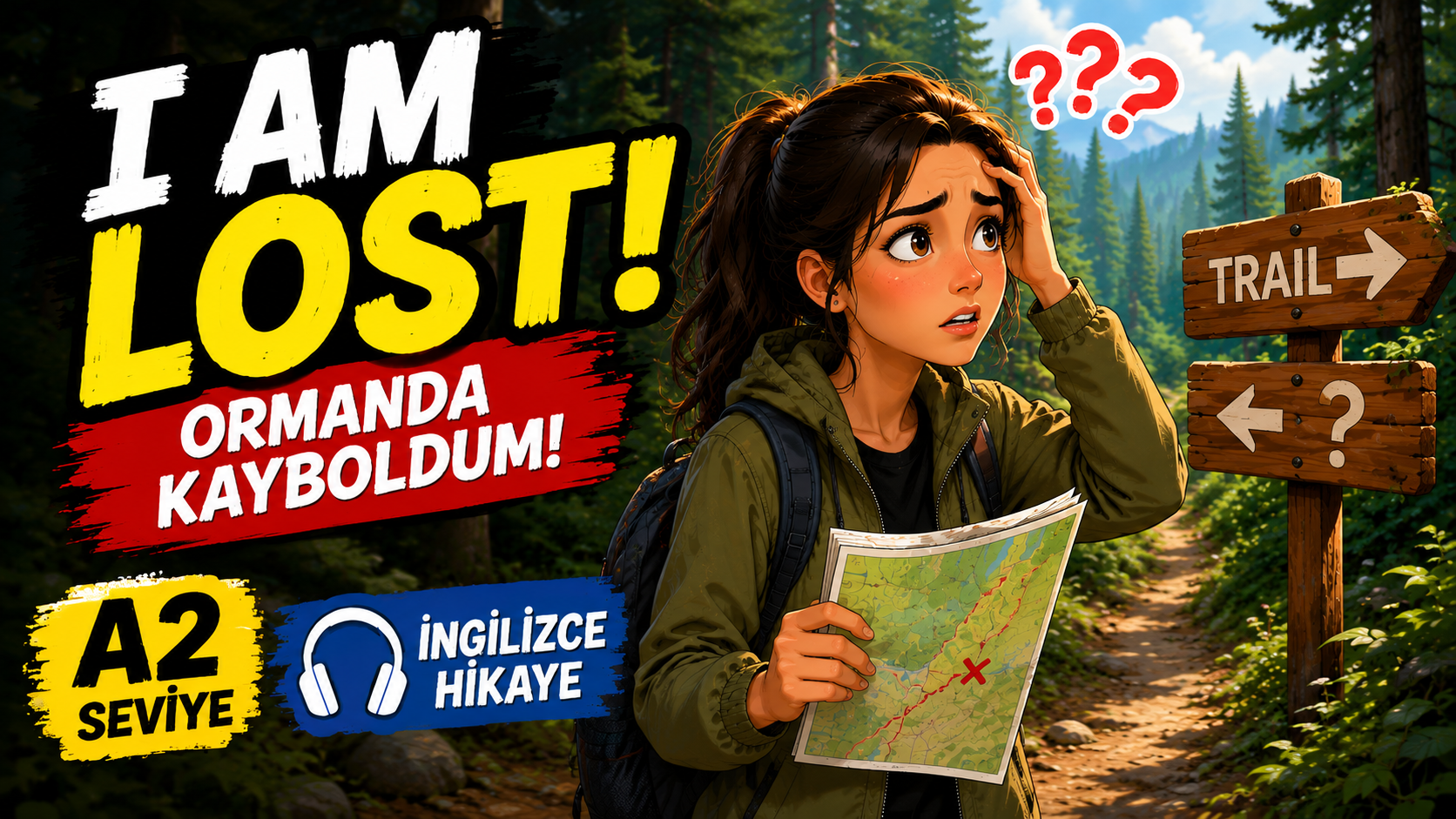
    When Deniz arrived at the forest, she saw a map near the entrance. She looked at it for a few seconds, but she did not study it carefully. She thought, “The trails look easy. I won’t get lost.”

    At first, everything was wonderful. Deniz walked along a narrow path and enjoyed the fresh air. She saw colorful flowers, tall trees, and a small stream. She took many photos with her phone. After about an hour, she found a beautiful place and sat down to eat her lunch.

    After lunch, Deniz decided to explore a different path. The path looked interesting, so she followed it. Soon, she noticed that the trail became smaller and less clear. However, she continued walking.

    About thirty minutes later, Deniz looked around and realized something was wrong. She did not recognize the area. The trees looked the same in every direction. She checked her phone, but there was no signal.

    Suddenly, she felt nervous.

    “Where am I?” she asked herself.

    She walked for another fifteen minutes, hoping to find the main trail again. But instead, she became more confused. She saw the same large rock twice and knew she was walking in circles.

    Deniz stopped and took a deep breath.

    “I am lost,” she said quietly.

    For a moment, she felt scared. The forest was getting darker because clouds covered the sun. She thought about calling for help, but her phone still had no signal.

    Then Deniz remembered something she learned in a hiking video. When you are lost, you should stay calm and avoid walking randomly. She sat down and drank some water. After a few minutes, she felt better.

    Deniz listened carefully. In the distance, she heard the sound of running water. She remembered crossing a stream earlier that day. She decided to walk toward the sound.

    Slowly and carefully, she followed the noise. After about twenty minutes, she found the stream. She recognized it immediately. She remembered taking photos there in the morning.

    Deniz followed the stream because she knew it was close to one of the main trails. Soon, she saw a wooden sign. The sign showed the direction to the forest entrance.

    Deniz smiled with relief.

    She followed the signs and continued walking. About forty minutes later, she finally reached the entrance of the forest. A park ranger was standing nearby.

    “Are you okay?” the ranger asked.

    “Yes,” Deniz replied. “I got lost, but I found my way back.”

    The ranger smiled. “That happens sometimes. Next time, study the map carefully and stay on the marked trails.”

    Deniz nodded. “I definitely will.”

    When she arrived home that evening, she told her family about her adventure. Everyone was happy that she was safe.

    Deniz learned an important lesson that day: nature is beautiful, but it is important to be prepared. And if you ever get lost, stay calm and think carefully.

    Sometimes, staying calm is the best way to find your way home.

    EnglishTurkish
    naturedoğa
    hikingyürüyüş yapmak
    forestorman
    trailpatika
    backpacksırt çantası
    streamdere
    pathyol, patika
    explorekeşfetmek
    realizefark etmek
    nervousgergin
    confusedkafası karışmış
    scaredkorkmuş
    deep breathderin nefes
    signalsinyal
    carefullydikkatlice
    recognizetanımak
    directionyön
    entrancegiriş
    rangerorman görevlisi
    adventuremacera
    preparedhazırlıklı

    📝 Comprehension Questions

    1. Why did Deniz go to the forest?
    2. What did Deniz see near the entrance?
    3. Why did Deniz get lost?
    4. What did Deniz do when she realized she was lost?
    5. What lesson did Deniz learn at the end of the story?

    ✅ True or False

    Write True (T) or False (F).

    1. Deniz carefully studied the map before hiking. _____
    2. Deniz followed a different path after lunch. _____
    3. Deniz’s phone had a strong signal in the forest. _____
    4. Deniz heard the sound of running water. _____
    5. A park ranger helped Deniz at the end of the story. _____

    Answers

    1. False
    2. True
    3. False
    4. True
    5. True

    ✏️ Fill in the Blanks

    Use the words below.

    (forest – lost – stream – map – calm)

    1. Deniz saw a ______ near the entrance.
    2. She got ______ in the forest.
    3. She heard a ______ in the distance.
    4. Deniz stayed ______ and thought carefully.
    5. She went hiking in a ______.

    Answers

    1. map
    2. lost
    3. stream
    4. calm
    5. forest

    🔤 Past Simple Practice

    Put the verbs in the Past Simple form.

    1. Deniz ______ (walk) along a narrow path.
    2. She ______ (see) colorful flowers.
    3. She ______ (hear) running water.
    4. She ______ (find) the stream.
    5. She ______ (tell) her family about the adventure.

    Answers

    1. walked
    2. saw
    3. heard
    4. found
    5. told

    A2 Seviyesindeki Tüm Hikayeleri Ziyaret Edin 😇