Tag: kolay ingilizce

  • Ünite 4: Articles (A, An, The) Alıştırmaları

    A, an ve the alıştırmalarıyla İngilizce articles konusunu pekiştirin. A1 seviyesinde testler, çeviri soruları ve cevap anahtarı.

    Bu alıştırmalarda İngilizcede a, an ve the kullanımını tekrar edeceksin.

    Bazı sorularda hiçbir article kullanmaman gerekebilir. Bu durumda boşluğa işareti koyabilirsin.

    Alıştırmalar kolaydan zora doğru ilerler. Önce bütün soruları cevap anahtarına bakmadan çözmeye çalış. Daha sonra sayfanın altındaki cevaplardan sonuçlarını kontrol edebilirsin. Her bir soru 1 puan. Puanını topla ve sonucunu öğren.

    Konuyu tekrar etmek için: Ünite 4 Articles (A, An, The) Konu Anlatımı


    A) Boşlukları A veya An ile Doldur

    Boşluklara a veya an yaz.

    1. ______ apple
    2. ______ book
    3. ______ engineer
    4. ______ teacher
    5. ______ umbrella
    6. ______ house
    7. ______ orange
    8. ______ student
    9. ______ hour
    10. ______ university
    11. ______ honest person
    12. ______ European country

    B) Çoktan Seçmeli Sorular

    Doğru seçeneği işaretle.

    1. She is ______ doctor.

    A) a
    B) an
    C) the
    D) —

    2. I have ______ orange in my bag.

    A) a
    B) an
    C) the
    D) —

    3. He is ______ university student.

    A) a
    B) an
    C) the
    D) —

    4. There is ______ dog in the garden.

    A) a
    B) an
    C) the
    D) —

    5. ______ dog is very friendly.

    A) A
    B) An
    C) The
    D) —

    Bu soruda köpekten daha önce bahsedildiğini düşün.

    6. My father is ______ engineer.

    A) a
    B) an
    C) the
    D) —

    7. Please close ______ window.

    A) a
    B) an
    C) the
    D) —

    Hangi pencere olduğu bellidir.

    8. ______ sun is very bright today.

    A) A
    B) An
    C) The
    D) —

    9. She drinks ______ water every morning.

    A) a
    B) an
    C) the
    D) —

    Genel anlamda sudan bahsediliyor.

    10. I live in ______ Istanbul.

    A) a
    B) an
    C) the
    D) —


    C) A mı, An mi?

    Doğru article’ı seç.

    1. ______ actor
    2. ______ young woman
    3. ______ old house
    4. ______ useful book
    5. ______ English teacher
    6. ______ yellow bag
    7. ______ interesting story
    8. ______ small apartment

    D) A, An, The veya Article Yok

    Boşluklara a, an, the veya yaz.

    1. I have ______ cat. ______ cat is white.
    2. She is ______ nurse.
    3. ______ children in this classroom are very quiet.
    4. We eat ______ breakfast at eight.
    5. He speaks ______ English very well.
    6. There is ______ egg in the fridge.
    7. Please open ______ door.
    8. ______ books are useful.

    Genel anlamda kitaplardan bahsediliyor.


    E) Kelimeleri Doğru Sıraya Koy

    Karışık kelimelerle doğru cümleyi oluştur.

    1.

    teacher / she / a / is

    2.

    apple / an / I / have

    3.

    on the table / the book / is

    4.

    engineer / is / an / he

    5.

    the door / please / open


    F) Hatayı Bul ve Düzelt

    Her cümlede article ile ilgili bir hata vardır. Cümleyi doğru şekilde yeniden yaz.

    1.

    I am teacher.

    2.

    She has a umbrella.

    3.

    Mert is an university student.

    4.

    I have a books.

    5.

    The Deniz is my friend.

    6.

    There is a water in the glass.

    7.

    Sun is very hot.

    8.

    I see a cat. A cat is under the table.


    G) Türkçeden İngilizceye Çeviri

    Cümleleri İngilizceye çevir.

    1.

    Ben bir öğretmenim.

    2.

    Onun bir şemsiyesi var.

    3.

    Masanın üzerinde bir elma var.

    4.

    Elma kırmızı.

    Elmadan daha önce bahsedildi.

    5.

    Güneş çok parlak.

    6.

    Kitaplar faydalıdır.

    Genel anlamda kitaplardan bahsediliyor.


    H) İngilizceden Türkçeye Çeviri

    Cümleleri Türkçeye çevir.

    1.

    She is an engineer.

    2.

    There is a dog near the door.

    3.

    The dog is very small.

    4.

    He eats an apple every day.

    5.

    The moon is beautiful tonight.

    6.

    Children like games.


    I) Mini Quiz

    1. Hangi cümle doğrudur?

    A) She is teacher.
    B) She is a teacher.
    C) She is an teacher.
    D) She is the teacher.

    Belirsiz bir meslekten bahsediliyor.

    2. Boşluğu tamamla.

    He has ______ old car.

    A) a
    B) an
    C) the
    D) —

    3. Hangi cümle doğrudur?

    A) I live in the Ankara.
    B) I live in an Ankara.
    C) I live in Ankara.
    D) I live in a Ankara.

    4. Cümledeki hatayı düzelt.

    There is an university near my house.

    5. Boşlukları tamamla.

    I see ______ woman at the bus stop. ______ woman is my teacher.


    Cevap Anahtarı

    A) Boşlukları A veya An ile Doldur

    1. an apple
    2. a book
    3. an engineer
    4. a teacher
    5. an umbrella
    6. a house
    7. an orange
    8. a student
    9. an hour
    10. a university
    11. an honest person
    12. a European country

    B) Çoktan Seçmeli Cevapları

    1. A) a
    2. B) an
    3. A) a
    4. A) a
    5. C) The
    6. B) an
    7. C) the
    8. C) The
    9. D) —
    10. D) —

    C) A mı, An mi?

    1. an actor
    2. a young woman
    3. an old house
    4. a useful book
    5. an English teacher
    6. a yellow bag
    7. an interesting story
    8. a small apartment

    D) A, An, The veya Article Yok

    1. I have a cat. The cat is white.
    2. She is a nurse.
    3. The children in this classroom are very quiet.
    4. We eat breakfast at eight.
    5. He speaks English very well.
    6. There is an egg in the fridge.
    7. Please open the door.
    8. Books are useful.

    E) Kelimeleri Doğru Sıraya Koy

    1.

    She is a teacher.
    O bir öğretmen.

    2.

    I have an apple.
    Bir elmam var.

    3.

    The book is on the table.
    Kitap masanın üzerinde.

    4.

    He is an engineer.
    O bir mühendis.

    5.

    Please open the door.
    Lütfen kapıyı aç.


    F) Hatayı Bul ve Düzelt

    1.

    ❌ I am teacher.

    I am a teacher.
    Ben öğretmenim.

    2.

    ❌ She has a umbrella.

    She has an umbrella.
    Onun bir şemsiyesi var.

    3.

    ❌ Mert is an university student.

    Mert is a university student.
    Mert üniversite öğrencisi.

    4.

    ❌ I have a books.

    I have books.
    Kitaplarım var.

    Alternatif olarak:

    I have a book.
    Bir kitabım var.

    5.

    ❌ The Deniz is my friend.

    Deniz is my friend.
    Deniz benim arkadaşım.

    6.

    ❌ There is a water in the glass.

    There is water in the glass.
    Bardağın içinde su var.

    7.

    ❌ Sun is very hot.

    The sun is very hot.
    Güneş çok sıcak.

    8.

    ❌ I see a cat. A cat is under the table.

    I see a cat. The cat is under the table.
    Bir kedi görüyorum. Kedi masanın altında.


    G) Türkçeden İngilizceye Çeviri

    1. I am a teacher.
    2. He has an umbrella. / She has an umbrella.
    3. There is an apple on the table.
    4. The apple is red.
    5. The sun is very bright.
    6. Books are useful.

    H) İngilizceden Türkçeye Çeviri

    1. She is an engineer.
      O bir mühendis.
    2. There is a dog near the door.
      Kapının yakınında bir köpek var.
    3. The dog is very small.
      Köpek çok küçük.
    4. He eats an apple every day.
      O her gün bir elma yer.
    5. The moon is beautiful tonight.
      Ay bu gece güzel.
    6. Children like games.
      Çocuklar oyunları sever.

    I) Mini Quiz Cevapları

    1. B) She is a teacher.
    2. B) an
    3. C) I live in Ankara.
    4. There is a university near my house.
      Evimin yakınında bir üniversite var.
    5. I see a woman at the bus stop. The woman is my teacher.
      Otobüs durağında bir kadın görüyorum. Kadın benim öğretmenim.

    Puanını Hesapla

    Bu sayfada toplam 68 cevap bulunmaktadır. Her doğru cevap için kendine 1 puan ver.

    PuanSonuç
    61–68Harika! A, an ve the kullanımını çok iyi öğrendin.
    51–60Çok iyi! Birkaç küçük kuralı tekrar etmen yeterli.
    38–50İyi gidiyorsun. A/an ve the arasındaki farkı tekrar et.
    0–37Konu anlatımına dön ve örnekleri yeniden incele.

    Articles Konusunu Tamamladın

    Tebrikler! Artık İngilizcede a, an ve the kelimelerinin temel kullanımını biliyorsun.

    Yanlış yaptığın soruları yeniden çöz. Özellikle şu kurallara dikkat et:

    • Sessiz ses → a
    • Sesli ses → an
    • Belirli veya daha önce bahsedilen isim → the
    • Genel çoğul isim → article yok
    • Şehir ve kişi isimleri → genellikle article yok

    ➡️ Ünite 4 Articles (A, An, The) Konu Anlatımına Dön

    ➡️ Sonraki Ders: Plural Nouns – İngilizcede Çoğul İsimler
  • Ünite 4: Articles (A, An, The) Konu Anlatımı

    İngilizcede a, an ve the kullanımını kolayca öğrenin. A1 seviyesinde kurallar, tablolar, örnek cümleler ve sık yapılan hatalar.

    İngilizcede isimlerin önünde sık sık a, an ve the kelimelerini görürüz. Bu kelimelere articles, yani tanımlıklar denir.

    Türkçede bu kelimelerin her zaman birebir karşılığı yoktur. Ancak İngilizcede bir şeyden ilk kez bahsederken, belirli bir nesneyi gösterirken veya tek bir kişiden söz ederken doğru article kullanmak gerekir.

    Örneğin:

    I have a cat.
    Bir kedim var.

    The cat is very friendly.
    Kedi çok arkadaş canlısı.

    İlk cümlede herhangi bir kediden söz ettiğimiz için a, ikinci cümlede ise artık hangi kediden bahsettiğimiz belli olduğu için the kullanılır.


    1. Articles Nedir?

    Article, bir ismin önünde kullanılan kısa bir kelimedir.

    İngilizcede üç temel article vardır:

    • a
    • an
    • the

    Genel Tablo

    ArticleKullanımıÖrnek
    aSessiz sesle başlayan tekil isimlerden öncea book
    anSesli sesle başlayan tekil isimlerden öncean apple
    theBelirli veya daha önce bahsedilen isimlerden öncethe book

    2. A ve An Ne Anlama Gelir?

    A ve an, Türkçeye genellikle “bir” olarak çevrilir.

    Belirli olmayan, herhangi bir kişi veya nesneden bahsederken kullanılır.

    Örnekler

    I have a car.
    Bir arabam var.

    She is a teacher.
    O bir öğretmen.

    He has an umbrella.
    Onun bir şemsiyesi var.

    There is an apple on the table.
    Masanın üzerinde bir elma var.

    Burada hangi araba, öğretmen, şemsiye veya elmadan bahsettiğimiz belli değildir.


    3. A Kullanımı

    A, sessiz bir sesle başlayan tekil ve sayılabilen isimlerden önce kullanılır.

    Formül

    a + tekil sayılabilen isim

    Örnekler

    a book
    bir kitap

    a car
    bir araba

    a student
    bir öğrenci

    a house
    bir ev

    a dog
    bir köpek

    Cümle İçinde Örnekler

    I have a book.
    Bir kitabım var.

    She is a student.
    O bir öğrenci.

    He lives in a small house.
    O küçük bir evde yaşıyor.

    There is a dog in the garden.
    Bahçede bir köpek var.

    Mert has a new job.
    Mert’in yeni bir işi var.


    4. An Kullanımı

    An, sesli bir sesle başlayan tekil ve sayılabilen isimlerden önce kullanılır.

    Genellikle a, e, i, o, u sesleriyle başlayan kelimelerde kullanılır.

    Formül

    an + tekil sayılabilen isim

    Örnekler

    an apple
    bir elma

    an egg
    bir yumurta

    an orange
    bir portakal

    an umbrella
    bir şemsiye

    an idea
    bir fikir

    Cümle İçinde Örnekler

    I eat an apple every morning.
    Her sabah bir elma yerim.

    She has an umbrella.
    Onun bir şemsiyesi var.

    He is an engineer.
    O bir mühendis.

    There is an egg in the fridge.
    Buzdolabında bir yumurta var.

    That is an interesting idea.
    Bu ilginç bir fikir.


    5. A mı, An mi?

    A ve an kullanımında kelimenin ilk harfine değil, ilk sesine dikkat ederiz.

    Normal Örnekler

    AAn
    a bookan apple
    a caran orange
    a dogan egg
    a teacheran engineer
    a housean umbrella

    Ancak bazı kelimelerin yazılışı ve okunuşu farklı olabilir.

    Önemli Örnekler

    an hour
    bir saat

    “Hour” kelimesindeki h harfi okunmaz. Kelime sesli bir sesle başladığı için an kullanılır.

    a university
    bir üniversite

    “University” kelimesi “yu” sesiyle başlar. Bu ses sessiz olduğu için a kullanılır.

    a European country
    bir Avrupa ülkesi

    “European” kelimesi de “yu” sesiyle başlar. Bu nedenle a kullanılır.

    an honest person
    dürüst bir kişi

    “Honest” kelimesindeki h okunmaz. Bu nedenle an kullanılır.

    Kısa Kural

    • Kelime sessiz bir sesle başlıyorsa → a
    • Kelime sesli bir sesle başlıyorsa → an

    6. A ve An Hangi İsimlerle Kullanılır?

    A ve an yalnızca:

    • Tekil
    • Sayılabilen
    • Belirli olmayan

    isimlerle kullanılır.

    Doğru Kullanımlar

    a chair
    bir sandalye

    an animal
    bir hayvan

    a friend
    bir arkadaş

    an office
    bir ofis

    Yanlış Kullanımlar

    a books

    books
    kitaplar

    an apples

    apples
    elmalar

    A ve an çoğul isimlerle kullanılmaz.


    7. Mesleklerle A ve An Kullanımı

    Bir kişinin mesleğini söylerken meslek adından önce genellikle a veya an kullanılır.

    Örnekler

    I am a teacher.
    Ben öğretmenim.

    She is a nurse.
    O hemşire.

    He is a doctor.
    O doktor.

    Merve is an engineer.
    Merve mühendis.

    Kerem is an actor.
    Kerem oyuncu.

    Sık Yapılan Hata

    I am teacher.

    I am a teacher.
    Ben öğretmenim.

    Meslek tekil olarak kullanılıyorsa önüne a veya an gelmelidir.


    8. Bir Kişiyi veya Nesneyi İlk Kez Söylerken

    Bir kişi veya nesneden ilk kez bahsederken genellikle a veya an kullanılır.

    Örnek

    I see a dog in the park.
    Parkta bir köpek görüyorum.

    Bu köpeği ilk kez söylüyoruz. Hangi köpek olduğu belli değildir.

    The dog is very small.
    Köpek çok küçük.

    İkinci cümlede artık hangi köpekten bahsettiğimiz bellidir. Bu nedenle the kullanılır.

    Başka Bir Örnek

    There is a woman at the door.
    Kapıda bir kadın var.

    The woman is my neighbour.
    Kadın benim komşum.


    9. The Kullanımı

    The, belirli bir kişi, nesne, hayvan veya yerden bahsederken kullanılır.

    Türkçeye her zaman ayrı bir kelime olarak çevrilmez.

    Formül

    the + belirli isim

    Örnekler

    the book
    belirli bir kitap

    the teacher
    belirli bir öğretmen

    the house
    belirli bir ev

    the children
    belirli çocuklar

    The, hem tekil hem de çoğul isimlerle kullanılabilir.


    10. Daha Önce Bahsedilen İsimlerle The

    Bir isimden ilk kez bahsederken a/an, ikinci kez bahsederken the kullanabiliriz.

    Örnek 1

    I have a cat. The cat is white.
    Bir kedim var. Kedi beyaz.

    Örnek 2

    There is a book on the table. The book is mine.
    Masanın üzerinde bir kitap var. Kitap benim.

    Örnek 3

    I see an old man. The man is near the bus stop.
    Yaşlı bir adam görüyorum. Adam otobüs durağının yanında.


    11. Hangi Şeyden Bahsettiğimiz Belliyse The Kullanılır

    Konuşan ve dinleyen kişi hangi şeyden bahsedildiğini biliyorsa the kullanılır.

    Örnekler

    Close the door, please.
    Lütfen kapıyı kapat.

    Burada hangi kapıdan bahsedildiği bellidir.

    Open the window, please.
    Lütfen pencereyi aç.

    The keys are on the table.
    Anahtarlar masanın üzerinde.

    Where is the bathroom?
    Banyo nerede?


    12. Dünyada Tek Olan Şeylerle The

    Dünyada tek olduğu düşünülen bazı şeylerle the kullanılır.

    Örnekler

    the sun
    güneş

    the moon
    ay

    the world
    dünya

    the sky
    gökyüzü

    Cümleler

    The sun is hot.
    Güneş sıcaktır.

    The moon is beautiful tonight.
    Ay bu gece güzel.

    The sky is blue.
    Gökyüzü mavi.

    The world is very big.
    Dünya çok büyük.


    13. Belirli Yerlerle The Kullanımı

    Konuşmada hangi yerden bahsedildiği belliyse the kullanılır.

    Örnekler

    I am at the bank.
    Bankadayım.

    She is at the supermarket.
    O süpermarkette.

    The hospital is near my house.
    Hastane evimin yakınında.

    We are in the kitchen.
    Biz mutfaktayız.

    Burada belirli bir banka, süpermarket, hastane veya mutfaktan bahsedilmektedir.


    14. Sıra Sayılarıyla The Kullanımı

    First, second, third gibi sıra sayılarından önce genellikle the kullanılır.

    Örnekler

    the first day
    ilk gün

    the second floor
    ikinci kat

    the third question
    üçüncü soru

    Cümleler

    This is the first lesson.
    Bu ilk ders.

    Our classroom is on the second floor.
    Bizim sınıfımız ikinci katta.

    Read the third question.
    Üçüncü soruyu oku.


    15. En Üstünlük Bildiren Kelimelerle The

    Best, biggest, oldest, youngest gibi en üstünlük bildiren kelimelerden önce the kullanılır.

    Örnekler

    the best student
    en iyi öğrenci

    the biggest house
    en büyük ev

    the oldest building
    en eski bina

    Cümleler

    She is the best student in the class.
    O sınıftaki en iyi öğrenci.

    This is the biggest room in the house.
    Bu evdeki en büyük oda.

    He is the oldest person in the family.
    O ailedeki en yaşlı kişi.


    16. Çoğul İsimlerle A ve An Kullanılmaz

    A ve an yalnızca tekil isimlerle kullanılır.

    Yanlış ve Doğru Örnekler

    a students

    students
    öğrenciler

    an oranges

    oranges
    portakallar

    a cars

    cars
    arabalar

    Belirli bir çoğul gruptan bahsedersek the kullanabiliriz.

    The students are in the classroom.
    Öğrenciler sınıfta.


    17. Genel Anlamda Konuşurken Article Kullanılmayan Durumlar

    Bir şeyden genel olarak bahsederken çoğul isimlerin önünde genellikle article kullanılmaz.

    Örnekler

    Cats are cute.
    Kediler sevimlidir.

    Books are useful.
    Kitaplar faydalıdır.

    Children like games.
    Çocuklar oyunları sever.

    Burada belirli kedilerden, kitaplardan veya çocuklardan bahsetmiyoruz. Genel bir bilgi veriyoruz.

    Belirli Bir Grupta The Kullanılır

    The cats in my garden are hungry.
    Bahçemdeki kediler aç.

    Burada belirli kedilerden bahsettiğimiz için the kullanılır.


    18. Sayılamayan İsimlerle A ve An Kullanılmaz

    Water, milk, coffee, bread gibi sayılamayan isimlerle doğrudan a/an kullanılmaz.

    Yanlış ve Doğru Örnekler

    a water

    water

    a milk

    milk

    a bread

    bread

    Ancak bir bardak, şişe veya parça söylersek kullanılabilir:

    a glass of water
    bir bardak su

    a bottle of milk
    bir şişe süt

    a piece of bread
    bir parça ekmek


    19. Özel İsimlerden Önce Genellikle Article Kullanılmaz

    İnsan isimleri, şehirler ve çoğu ülke adı önünde genellikle article kullanılmaz.

    Örnekler

    Merve is my friend.
    Merve benim arkadaşım.

    I live in Istanbul.
    İstanbul’da yaşıyorum.

    She is from Turkey.
    O Türkiye’den.

    Kerem lives in Ankara.
    Kerem Ankara’da yaşıyor.

    Yanlış Örnekler

    The Merve is my friend.

    I live in the Istanbul.

    She is from the Turkey.

    Bazı ülke adları istisnadır. Ancak A1 seviyesinde temel kural olarak özel isimlerin önünde article kullanılmadığını hatırlamak yeterlidir.


    20. Öğünler, Günler ve Dillerle Article Kullanımı

    Genel olarak öğünler, günler ve dillerden önce article kullanılmaz.

    Öğünler

    I have breakfast at eight.
    Saat sekizde kahvaltı yaparım.

    We eat dinner together.
    Birlikte akşam yemeği yeriz.

    Günler

    Today is Monday.
    Bugün pazartesi.

    The lesson is on Friday.
    Ders cuma günü.

    Diller

    I speak Turkish.
    Türkçe konuşuyorum.

    She studies English.
    O İngilizce çalışıyor.


    21. A, An ve The Karşılaştırması

    KullanımArticleÖrnek
    Belirsiz, tekil, sessiz sesaa car
    Belirsiz, tekil, sesli sesanan apple
    Belirli veya bilinen isimthethe car
    Çoğul ve genel anlamarticle yokCars are expensive.
    Sayılamayan ve genel anlamarticle yokWater is important.

    Örnek

    I see a car.
    Bir araba görüyorum.

    The car is red.
    Araba kırmızı.

    Cars are useful.
    Arabalar faydalıdır.


    22. Günlük Hayattan Örnek Cümleler

    I have a new bag.
    Yeni bir çantam var.

    She is an English teacher.
    O bir İngilizce öğretmeni.

    There is a cup on the table.
    Masanın üzerinde bir fincan var.

    The cup is blue.
    Fincan mavi.

    He eats an apple every day.
    O her gün bir elma yer.

    The apple is in his bag.
    Elma onun çantasında.

    Mert is a doctor.
    Mert doktordur.

    Deniz is an engineer.
    Deniz mühendistir.

    Please open the door.
    Lütfen kapıyı aç.

    The children are in the garden.
    Çocuklar bahçede.

    The sun is very bright today.
    Güneş bugün çok parlak.

    I need an umbrella.
    Bir şemsiyeye ihtiyacım var.

    We live in a small apartment.
    Küçük bir apartman dairesinde yaşıyoruz.

    The apartment is near the station.
    Apartman dairesi istasyonun yakınında.

    Books are important.
    Kitaplar önemlidir.


    23. Günlük Hayattan Mini Diyalog

    Ece: What is in your bag?
    Çantanda ne var?

    Mert: There is a book, an apple and a bottle of water.
    Bir kitap, bir elma ve bir şişe su var.

    Ece: Is the book for your English class?
    Kitap İngilizce dersin için mi?

    Mert: Yes, it is. The book is very useful.
    Evet. Kitap çok faydalı.

    Ece: Is that an umbrella?
    O bir şemsiye mi?

    Mert: Yes. The weather is rainy today.
    Evet. Bugün hava yağmurlu.

    Ece: Where is the umbrella now?
    Şemsiye şimdi nerede?

    Mert: It is next to the door.
    Kapının yanında.


    24. En Sık Yapılan Hatalar

    YanlışDoğrusuNeden?
    I am teacher.I am a teacher.Tekil mesleklerden önce a/an gerekir.
    She has a apple.She has an apple.Apple sesli sesle başlar.
    He is an university student.He is a university student.University “yu” sesiyle başlar.
    It is a hour.It is an hour.Hour kelimesindeki h okunmaz.
    I have a books.I have books.A çoğul isimlerle kullanılmaz.
    She drinks a water.She drinks water.Water sayılamayan bir isimdir.
    I live in the Istanbul.I live in Istanbul.Şehir isimleriyle genellikle the kullanılmaz.
    Sun is hot.The sun is hot.Dünyada tek olan şeylerle the kullanılır.
    I see a dog. A dog is black.I see a dog. The dog is black.İkinci kez bahsederken the kullanılır.
    Open a door, please.Open the door, please.Hangi kapı olduğu belliyse the kullanılır.

    25. Konuyu Kolay Hatırlamanın Yolları

    A ve An İçin

    Kendine şu iki soruyu sor:

    1. İsim tekil ve sayılabilir mi?
    2. Kelime hangi sesle başlıyor?
    • Sessiz ses → a
    • Sesli ses → an

    The İçin

    Kendine şu soruyu sor:

    Konuşan ve dinleyen kişi hangi şeyden bahsedildiğini biliyor mu?

    Cevap evetse → the

    Kısa Hatırlatma

    • İlk kez bahsediyorsan → a/an
    • İkinci kez bahsediyorsan → the
    • Belirli bir şeyse → the
    • Genel ve çoğulsa → article kullanma

    26. Articles Konusunu Hikâyelerle Pekiştir

    A, an ve the kullanımını hikâyeler içinde görmek, aralarındaki farkı daha kolay anlamana yardımcı olur.

    Hikâyeleri okurken veya dinlerken şu yapılara dikkat edebilirsin:

    • a new student
    • an old house
    • a teacher
    • the classroom
    • the family
    • the phone

    A1 Seviye İngilizce Hikâyeler

    Örneğin Yeni Öğrenci hikâyesinde bir öğrenciden ilk kez bahsederken a new student, daha sonra aynı öğrenciden söz ederken the new student veya she kullanılabilir.

    Hikâyeleri YouTube üzerinden izleyebilir veya Spotify üzerinden dinleyebilirsin.


    Mini Özet

    • A, an ve the kelimelerine article denir.
    • A ve an, genellikle “bir” anlamına gelir.
    • A, sessiz sesle başlayan tekil isimlerden önce kullanılır.
    • An, sesli sesle başlayan tekil isimlerden önce kullanılır.
    • A ve an kullanımında harfe değil, kelimenin ilk sesine bakılır.
    • A/an, çoğul veya sayılamayan isimlerle kullanılmaz.
    • Mesleklerden önce genellikle a veya an kullanılır.
    • The, belirli veya daha önce bahsedilen isimlerle kullanılır.
    • Dünyada tek olan şeylerden önce the kullanılır.
    • Genel anlamdaki çoğul isimlerin önünde article kullanılmaz.
    • Şehir, kişi, dil ve çoğu ülke isminden önce article kullanılmaz.
    • Bir isimden ilk kez bahsederken a/an, ikinci kez bahsederken the kullanılabilir.

    Son Söz

    Tebrikler! Artık İngilizcede a, an ve the arasındaki temel farkları öğrendin.

    Başlangıçta hangi article kullanılacağı biraz karışık gelebilir. Ancak cümlenin belirli bir şeyden mi yoksa herhangi bir şeyden mi bahsettiğine dikkat ettiğinde doğru seçimi yapmak kolaylaşır.

    Şimdi öğrendiklerini pekiştirmek için alıştırma sayfasına geçebilirsin.

    ➡️ Articles (A, An, The) Alıştırmaları ve Cevap Anahtarı

    ➡️ Bir sonraki derste Plural Nouns: İngilizcede Çoğul İsimler konusunu öğreneceğiz.

  • Ünite 3 Alıştırmaları

    İngilizce iyelik sıfatları alıştırmalarıyla my, your, his, her, its, our ve their kullanımını öğrenin. A1 testleri ve cevap anahtarı.

    İyelik Sıfatları (Possessive Adjectives) Alıştırmaları

    Bu alıştırmalarda my, your, his, her, its, our ve their iyelik sıfatlarını tekrar edeceksin.

    Alıştırmalar kolaydan zora doğru ilerler. Önce cevap anahtarına bakmadan bütün soruları çözmeye çalış. Daha sonra sayfanın altındaki cevaplarla sonuçlarını kontrol edebilirsin.

    Bu sayfadaki alıştırmalar kolaydan zora doğru ilerler. Önce soruları cevaplamaya çalış. Daha sonra sayfanın altındaki cevap anahtarından cevaplarını kontrol et.

    Her doğru cevap 1 puandır

    Konuyu tekrar etmek için: Possessive Adjectives Konu Anlatımı


    A) Doğru İyelik Sıfatını Yaz

    Boşlukları my, your, his, her, its, our veya their ile tamamla.

    1. I am Ece. ______ name is Ece.
    2. You are a student. ______ school is near here.
    3. Murat is my brother. ______ room is very small.
    4. Zeynep is a teacher. ______ students are very hardworking.
    5. The dog is eating ______ food.
    6. We live in Istanbul. ______ house is near the sea.
    7. Merve and Ece are sisters. ______ mother is a doctor.
    8. I have a new phone. ______ phone is very fast.
    9. Kerem has a car. ______ car is black.
    10. The school is famous for ______ library.

    B) Çoktan Seçmeli Sorular

    Doğru seçeneği işaretle.

    1. I am a teacher. ______ students are in the classroom.

    A) His
    B) My
    C) Their
    D) Her

    2. Merve is my friend. ______ house is near the park.

    A) His
    B) Its
    C) Her
    D) Our

    3. Murat has a new job. ______ office is in the city centre.

    A) His
    B) Her
    C) My
    D) Their

    4. We are students. ______ teacher is very kind.

    A) Their
    B) Our
    C) His
    D) Your

    5. The children are in ______ classroom.

    A) their
    B) its
    C) his
    D) my

    6. The cat is playing with ______ toy.

    A) her
    B) their
    C) its
    D) our

    7. “Senin adın ne?” cümlesinde hangi iyelik sıfatı kullanılır?

    A) My
    B) Your
    C) His
    D) Their

    8. Elif is a nurse. ______ hospital is very large.

    A) His
    B) Her
    C) Its
    D) Our

    9. My parents are in ______ garden.

    A) their
    B) its
    C) his
    D) her

    10. “Bizim evimiz küçük.” cümlesinde hangi iyelik sıfatı kullanılır?

    A) My
    B) Your
    C) Our
    D) Their


    C) Özne Zamirini İyelik Sıfatına Çevir

    Parantez içindeki özne zamirine uygun iyelik sıfatını yaz.

    1. I → ______ book
    2. You → ______ name
    3. He → ______ father
    4. She → ______ sister
    5. It → ______ tail
    6. We → ______ classroom
    7. They → ______ children
    8. I → ______ friends
    9. She → ______ house
    10. He → ______ job

    D) Cümleleri Tamamla

    Parantez içindeki bilgiye göre uygun iyelik sıfatını yaz.

    1. This is Ece. ______ brother is a student. (Ece’nin)
    2. Murat is a doctor. ______ hospital is near here. (Murat’ın)
    3. My sister and I are at school. ______ lesson starts at nine. (Bizim)
    4. The children are with ______ teacher. (Çocukların)
    5. I am at home. ______ mother is in the kitchen. (Benim)
    6. The bird is in ______ cage. (Kuşun)
    7. You have a new bag. Is this ______ bag? (Senin)
    8. Zeynep and Merve are sisters. ______ father is an engineer. (Onların)
    9. Kerem has a sister. ______ sister lives in Ankara. (Kerem’in)
    10. Elif has a brother. ______ brother is 20 years old. (Elif’in)

    E) Kelimeleri Doğru Sıraya Koy

    Karışık kelimelerle doğru cümleyi oluştur.

    1.

    my / this / book / is

    2.

    name / her / Zeynep / is

    3.

    our / is / teacher / kind / very

    4.

    their / at school / children / are

    5.

    its / the dog / food / is eating


    F) Hatayı Bul ve Düzelt

    Her cümlede bir hata vardır. Cümleyi doğru şekilde yeniden yaz.

    1.

    I name is Mert.

    2.

    Merve is my friend. His house is near the park.

    3.

    Murat has a car. Her car is new.

    4.

    We are students. We teacher is very kind.

    5.

    The cat is eating it’s food.


    G) Doğru Cümleyi Seç

    1.

    A) My name is Elif.
    B) I name is Elif.

    2.

    A) He car is black.
    B) His car is black.

    3.

    A) Their house is large.
    B) They house is large.

    4.

    A) Our school is new.
    B) We school is new.

    5.

    A) The dog is in its bed.
    B) The dog is in it’s bed.


    H) Türkçeden İngilizceye Çeviri

    Cümleleri İngilizceye çevir.

    1.

    Benim adım Deniz.

    2.

    Senin çantan masanın üzerinde.

    3.

    Onun arabası yeni. (Erkek)

    4.

    Onun annesi öğretmen. (Kadın)

    5.

    Bizim evimiz çok küçük.

    6.

    Onların çocukları okulda.

    7.

    Kedi kendi yatağında.

    8.

    Onun erkek kardeşi doktor. (Merve’nin)


    I) İngilizceden Türkçeye Çeviri

    Cümleleri Türkçeye çevir.

    1.

    My phone is in my bag.

    2.

    Her father is a teacher.

    3.

    His sister lives in Bursa.

    4.

    Our classroom is upstairs.

    5.

    Their house is near the sea.

    6.

    The dog is eating its food.

    7.

    Is this your jacket?

    8.

    Their children are very young.


    J) Mini Quiz

    1. Boşluğu tamamla.

    She is my sister. ______ name is Ece.

    A) His
    B) Her
    C) Its
    D) Our

    2. Boşluğu tamamla.

    We live in Ankara. ______ house is near the city centre.

    A) My
    B) Your
    C) Our
    D) Their

    3. Hangi cümle doğrudur?

    A) The cat is playing with it’s toy.
    B) The cat is playing with its toy.
    C) The cat is playing with their toy.
    D) The cat is playing with he toy.

    4. Cümledeki hatayı düzelt.

    Murat is a doctor. Her hospital is very large.

    5. Türkçeye çevir.

    Their teacher is very friendly.


    Cevap Anahtarı

    A) Doğru İyelik Sıfatını Yaz

    1. My
    2. Your
    3. His
    4. Her
    5. its
    6. Our
    7. Their
    8. My
    9. His
    10. its

    B) Çoktan Seçmeli Cevapları

    1. B) My
    2. C) Her
    3. A) His
    4. B) Our
    5. A) their
    6. C) its
    7. B) Your
    8. B) Her
    9. A) their
    10. C) Our

    C) Özne Zamirini İyelik Sıfatına Çevir

    1. my book
    2. your name
    3. his father
    4. her sister
    5. its tail
    6. our classroom
    7. their children
    8. my friends
    9. her house
    10. his job

    D) Cümleleri Tamamla

    1. Her
    2. His
    3. Our
    4. their
    5. My
    6. its
    7. your
    8. Their
    9. His
    10. Her

    E) Kelimeleri Doğru Sıraya Koy

    1.

    This is my book.
    Bu benim kitabım.

    2.

    Her name is Zeynep.
    Onun adı Zeynep.

    3.

    Our teacher is very kind.
    Bizim öğretmenimiz çok nazik.

    4.

    Their children are at school.
    Onların çocukları okulda.

    5.

    The dog is eating its food.
    Köpek kendi yemeğini yiyor.


    F) Hatayı Bul ve Düzelt

    1.

    ❌ I name is Mert.

    My name is Mert.
    Benim adım Mert.

    2.

    ❌ Merve is my friend. His house is near the park.

    Merve is my friend. Her house is near the park.
    Merve benim arkadaşım. Onun evi parkın yakınında.

    3.

    ❌ Murat has a car. Her car is new.

    Murat has a car. His car is new.
    Murat’ın bir arabası var. Onun arabası yeni.

    4.

    ❌ We are students. We teacher is very kind.

    We are students. Our teacher is very kind.
    Biz öğrenciyiz. Bizim öğretmenimiz çok nazik.

    5.

    ❌ The cat is eating it’s food.

    The cat is eating its food.
    Kedi kendi yemeğini yiyor.


    G) Doğru Cümleyi Seç

    1. A) My name is Elif.
    2. B) His car is black.
    3. A) Their house is large.
    4. A) Our school is new.
    5. A) The dog is in its bed.

    H) Türkçeden İngilizceye Çeviri

    1. My name is Deniz.
    2. Your bag is on the table.
    3. His car is new.
    4. Her mother is a teacher.
    5. Our house is very small.
    6. Their children are at school.
    7. The cat is in its bed.
    8. Her brother is a doctor.

    I) İngilizceden Türkçeye Çeviri

    1. My phone is in my bag.
      Benim telefonum çantamda.
    2. Her father is a teacher.
      Onun babası öğretmen.
    3. His sister lives in Bursa.
      Onun kız kardeşi Bursa’da yaşıyor.
    4. Our classroom is upstairs.
      Bizim sınıfımız üst katta.
    5. Their house is near the sea.
      Onların evi denizin yakınında.
    6. The dog is eating its food.
      Köpek kendi yemeğini yiyor.
    7. Is this your jacket?
      Bu senin ceketin mi?
    8. Their children are very young.
      Onların çocukları çok küçük.

    J) Mini Quiz Cevapları

    1. B) Her
    2. C) Our
    3. B) The cat is playing with its toy.
    4. Murat is a doctor. His hospital is very large.
      Murat doktor. Onun hastanesi çok büyük.
    5. Onların öğretmeni çok arkadaş canlısı.

    Puanını Hesapla

    Bu sayfada toplam 69 cevap bulunmaktadır. Her doğru cevap için kendine 1 puan ver.

    PuanSonuç
    62–69Harika! İyelik sıfatlarını çok iyi öğrendin.
    52–61Çok iyi! Yalnızca birkaç küçük tekrar yapmalısın.
    38–51İyi gidiyorsun. His, her ve their kullanımını tekrar et.
    0–37Konu anlatımına dön ve örnekleri yeniden incele.

    Possessive Adjectives Konusunu Tamamladın

    Tebrikler! Artık İngilizcede bir şeyin kime ait olduğunu my, your, his, her, its, our ve their kelimeleriyle anlatabilirsin.

    Yanlış yaptığın soruları yeniden çöz. Özellikle şu ayrımlara dikkat et:

    • he → his
    • she → her
    • it → its
    • we → our
    • they → their

    ➡️ Ünite 3 Possessive Adjectives Konu Anlatımına Dön

    ➡️ Sonraki Ders: Ünite 4: Articles (A, An, The) Konu Anlatımı

  • Ünite 3: Possessive Adjectives (İyelik Sıfatları) Konu Anlatımı

    İngilizce iyelik sıfatlarını kolayca öğrenin. My, your, his, her, its, our ve their kullanımı; tablolar, örnekler ve sık yapılan hatalar.

    İngilizcede bir şeyin kime ait olduğunu anlatmak için iyelik sıfatlarını kullanırız.

    My, your, his, her, its, our ve their kelimelerine İngilizcede Possessive Adjectives, yani İyelik Sıfatları denir.

    Örneğin:

    This is my book.
    Bu benim kitabım.

    Her name is Zeynep.
    Onun adı Zeynep.

    Their house is very big.
    Onların evi çok büyük.

    İyelik sıfatları günlük İngilizcede çok sık kullanılır. Ailemizi, eşyalarımızı, arkadaşlarımızı, işimizi veya yaşadığımız yeri anlatırken bu kelimelere ihtiyaç duyarız.


    1. Possessive Adjectives Nedir?

    Possessive, “iyelik” veya “aitlik” anlamına gelir.

    Adjective ise “sıfat” demektir.

    İyelik sıfatları, bir ismin kime ait olduğunu gösterir.

    Örnek

    This is a bag.
    Bu bir çanta.

    Bu çantanın bana ait olduğunu söylemek için my kullanırız:

    This is my bag.
    Bu benim çantam.

    Burada:

    • my: benim
    • bag: çanta

    İyelik sıfatı, kendisinden sonra gelen ismin kime ait olduğunu gösterir.


    İngilizce İyelik Sıfatları Tablosu

    Özne zamiriİyelik sıfatıTürkçesi
    Imybenim
    Youyoursenin / sizin
    Hehisonun, erkek
    Sheheronun, kadın
    Ititsonun, hayvan veya nesne
    Weourbizim
    Theytheironların

    Kısa Kural

    • I → my
    • You → your
    • He → his
    • She → her
    • It → its
    • We → our
    • They → their

    Özne zamirleri ile iyelik sıfatlarını birlikte öğrenmek konuyu daha kolay hatırlamanı sağlar.


    2. İyelik Sıfatları Cümlede Nerede Kullanılır?

    İyelik sıfatları genellikle bir ismin önünde kullanılır.

    Formül

    İyelik sıfatı + isim

    Örnekler

    my book
    benim kitabım

    your name
    senin adın

    his car
    onun arabası

    her family
    onun ailesi

    our house
    bizim evimiz

    their teacher
    onların öğretmeni

    İyelik sıfatından sonra genellikle bir isim gelmelidir.

    This is my phone.
    Bu benim telefonum.

    This is my.

    İkinci cümlede my kelimesinden sonra bir isim bulunmadığı için cümle tamamlanmamıştır.


    3. My Kullanımı

    My, “benim” anlamına gelir.

    Konuşan kişi, kendisine ait bir şeyden bahsederken my kullanır.

    Örnekler

    My name is Ece.
    Benim adım Ece.

    My house is in Istanbul.
    Benim evim İstanbul’da.

    This is my phone.
    Bu benim telefonum.

    My mother is a teacher.
    Benim annem öğretmen.

    My friends are at school.
    Benim arkadaşlarım okulda.

    I ve My Arasındaki Fark

    I, “ben” anlamına gelir ve cümlede özne olarak kullanılır.

    My, “benim” anlamına gelir ve bir ismin önünde kullanılır.

    I am a student.
    Ben öğrenciyim.

    My school is near my house.
    Benim okulum evimin yakınında.


    4. Your Kullanımı

    Your, hem “senin” hem de “sizin” anlamına gelebilir.

    Tek bir kişiye veya birden fazla kişiye ait bir şeyden bahsederken kullanılabilir.

    Tek Bir Kişi İçin

    What is your name?
    Senin adın ne?

    Is this your bag?
    Bu senin çantan mı?

    Your coffee is ready.
    Senin kahven hazır.

    Birden Fazla Kişi İçin

    Your books are on the table.
    Sizin kitaplarınız masanın üzerinde.

    Your classroom is upstairs.
    Sizin sınıfınız üst katta.

    Your teacher is very kind.
    Sizin öğretmeniniz çok nazik.

    Your kelimesinin “senin” mi yoksa “sizin” mi olduğu konuşmanın bağlamından anlaşılır.


    5. His Kullanımı

    His, erkek bir kişiye ait olan şeyleri anlatırken kullanılır.

    Türkçede “onun” anlamına gelir.

    Örnekler

    Murat is my brother. His room is very small.
    Murat benim erkek kardeşim. Onun odası çok küçük.

    Kerem is a doctor. His hospital is near here.
    Kerem doktor. Onun hastanesi buraya yakın.

    His name is Mehmet.
    Onun adı Mehmet.

    His car is new.
    Onun arabası yeni.

    His parents are in Ankara.
    Onun anne ve babası Ankara’da.

    Burada sahip olan kişi erkektir. Bu nedenle his kullanılır.


    6. Her Kullanımı

    Her, kadın bir kişiye ait olan şeyleri anlatırken kullanılır.

    Türkçede “onun” anlamına gelir.

    Örnekler

    Zeynep is my friend. Her house is near the park.
    Zeynep benim arkadaşım. Onun evi parkın yakınında.

    Elif is a student. Her school is very large.
    Elif öğrenci. Onun okulu çok büyük.

    Her name is Merve.
    Onun adı Merve.

    Her bag is on the chair.
    Onun çantası sandalyenin üzerinde.

    Her children are at school.
    Onun çocukları okulda.

    Burada sahip olan kişi kadındır. Bu nedenle her kullanılır.


    7. Its Kullanımı

    Its, bir hayvana, nesneye, kuruma veya yere ait olan şeylerden bahsederken kullanılır.

    Türkçede “onun” anlamına gelir.

    Hayvanlar İçin

    The dog is in its bed.
    Köpek kendi yatağında.

    The cat is eating its food.
    Kedi kendi yemeğini yiyor.

    The bird is in its cage.
    Kuş kendi kafesinde.

    Nesneler İçin

    The phone is new. Its screen is very large.
    Telefon yeni. Onun ekranı çok büyük.

    The house is old, but its garden is beautiful.
    Ev eski ama onun bahçesi güzel.

    Yerler ve Kurumlar İçin

    The school is famous for its library.
    Okul, kütüphanesiyle ünlü.

    Istanbul is famous for its history.
    İstanbul tarihiyle ünlüdür.


    Its ve It’s Arasındaki Fark

    Its ve it’s aynı şey değildir.

    KelimeAnlamıÖrnek
    itsonunThe dog is in its bed.
    it’sit is / it hasIt’s cold today.

    Örnekler

    The cat is playing with its toy.
    Kedi kendi oyuncağıyla oynuyor.

    It’s very cold today.
    Bugün hava çok soğuk.

    Its kelimesinde kesme işareti yoktur.

    It’s, genellikle it is kelimelerinin kısaltmasıdır.


    8. Our Kullanımı

    Our, “bizim” anlamına gelir.

    Konuşan kişinin de içinde bulunduğu bir gruba ait olan şeylerden bahsederken kullanılır.

    Örnekler

    Our house is near the sea.
    Bizim evimiz denizin yakınında.

    Our teacher is very friendly.
    Bizim öğretmenimiz çok arkadaş canlısı.

    Our parents are at home.
    Bizim anne ve babamız evde.

    Our classroom is on the second floor.
    Bizim sınıfımız ikinci katta.

    Our English lesson is on Monday.
    Bizim İngilizce dersimiz pazartesi günü.

    We ve Our Arasındaki Fark

    We, “biz” anlamına gelir.

    Our, “bizim” anlamına gelir.

    We are students.
    Biz öğrenciyiz.

    Our school is very large.
    Bizim okulumuz çok büyük.


    9. Their Kullanımı

    Their, “onların” anlamına gelir.

    Birden fazla kişiye, hayvana veya nesneye ait olan şeylerden bahsederken kullanılır.

    İnsanlar İçin

    Merve and Ece are sisters. Their mother is a doctor.
    Merve ve Ece kız kardeştir. Onların annesi doktor.

    The students are in their classroom.
    Öğrenciler kendi sınıflarında.

    My parents are at their house.
    Annem ve babam kendi evlerinde.

    Hayvanlar İçin

    The dogs are eating their food.
    Köpekler kendi yemeklerini yiyor.

    The birds are in their cages.
    Kuşlar kendi kafeslerinde.

    Nesneler İçin

    The houses are old, but their gardens are beautiful.
    Evler eski ama bahçeleri güzel.


    10. Özne Zamirleri ve İyelik Sıfatları

    Özne zamiriTürkçesiİyelik sıfatıTürkçesi
    IBenmybenim
    YouSen / Sizyoursenin / sizin
    HeO, erkekhisonun
    SheO, kadınheronun
    ItO, hayvan veya nesneitsonun
    WeBizourbizim
    TheyOnlartheironların

    Örnekler

    I am a teacher. My students are very hardworking.
    Ben öğretmenim. Benim öğrencilerim çok çalışkan.

    She is Merve. Her family is from Bursa.
    O Merve. Onun ailesi Bursalı.

    They are my friends. Their house is near here.
    Onlar benim arkadaşlarım. Onların evi buraya yakın.


    11. İyelik Sıfatını Sahip Olan Kişiye Göre Seç

    İyelik sıfatını seçerken sahip olunan şeye değil, sahip olan kişiye bakmalıyız.

    Örnek

    Murat has a sister. His sister is a student.
    Murat’ın bir kız kardeşi var. Onun kız kardeşi öğrenci.

    Burada kız kardeş kadın olsa da sahip olan kişi Murat’tır. Murat erkek olduğu için his kullanılır.

    Merve has a brother. Her brother is a doctor.
    Merve’nin bir erkek kardeşi var. Onun erkek kardeşi doktor.

    Burada erkek kardeş erkek olsa da sahip olan kişi Merve’dir. Merve kadın olduğu için her kullanılır.

    Kısa Kural

    • Sahip olan erkekse → his
    • Sahip olan kadınsa → her
    • Sahip olan nesne veya hayvansa → its
    • Sahip olan kişiler çoğulsa → their

    12. İsim Tekil veya Çoğul Olsa da İyelik Sıfatı Değişmez

    İyelik sıfatları, kendilerinden sonra gelen ismin tekil veya çoğul olmasına göre değişmez.

    Örnekler

    my book
    benim kitabım

    my books
    benim kitaplarım

    her friend
    onun arkadaşı

    her friends
    onun arkadaşları

    their house
    onların evi

    their houses
    onların evleri

    My kelimesi hem tekil hem de çoğul isimlerle kullanılabilir.


    13. A ve An ile Birlikte Kullanım

    İyelik sıfatı bulunan bir ismin önünde genellikle a veya an kullanılmaz.

    This is my a bag.

    This is my bag.
    Bu benim çantam.

    He is a my friend.

    He is my friend.
    O benim arkadaşım.

    Çünkü my, your, his, her, its, our ve their kelimeleri zaten ismi belirli hale getirir.


    14. Günlük Hayattan Örnek Cümleler

    My name is Deniz.
    Benim adım Deniz.

    Your phone is on the table.
    Senin telefonun masanın üzerinde.

    His father is a teacher.
    Onun babası öğretmen.

    Her sister lives in Ankara.
    Onun kız kardeşi Ankara’da yaşıyor.

    The dog is eating its food.
    Köpek kendi yemeğini yiyor.

    Our house is very small.
    Bizim evimiz çok küçük.

    Their children are at school.
    Onların çocukları okulda.

    My coffee is cold.
    Benim kahvem soğuk.

    Is this your jacket?
    Bu senin ceketin mi?

    His car is in front of the house.
    Onun arabası evin önünde.

    Her English is very good.
    Onun İngilizcesi çok iyi.

    Our lesson starts at nine.
    Bizim dersimiz saat dokuzda başlıyor.

    Their garden is beautiful.
    Onların bahçesi güzel.

    The cat is in its box.
    Kedi kendi kutusunda.

    Your books are in my bag.
    Senin kitapların benim çantamda.


    15. Günlük Hayattan Mini Diyalog

    Ece: Is this your bag?
    Bu senin çantan mı?

    Mert: No, it isn’t. My bag is black.
    Hayır, değil. Benim çantam siyah.

    Ece: Is it Deniz’s bag?
    Deniz’in çantası mı?

    Mert: Yes, I think it is. Her bag is blue.
    Evet, sanırım öyle. Onun çantası mavi.

    Ece: Where is Deniz?
    Deniz nerede?

    Mert: She is in her classroom.
    O kendi sınıfında.

    Ece: Are these your books?
    Bunlar senin kitapların mı?

    Mert: No, they are our teacher’s books.
    Hayır, onlar öğretmenimizin kitapları.


    16. En Sık Yapılan Hatalar

    YanlışDoğrusuNeden?
    I name is Ece.My name is Ece.“Benim” anlamında my kullanılmalıdır.
    She name is Merve.Her name is Merve.Kadına ait bir şey için her kullanılır.
    He car is new.His car is new.Erkeğe ait bir şey için his kullanılır.
    We house is big.Our house is big.“Bizim” anlamında our kullanılır.
    They teacher is kind.Their teacher is kind.“Onların” anlamında their kullanılır.
    The dog is in it’s bed.The dog is in its bed.İyelik bildiren its kesme işareti almaz.
    This is my a phone.This is my phone.İyelik sıfatıyla birlikte a kullanılmaz.
    This book is my.This is my book.My kelimesinden sonra isim gelmelidir.
    Merve has a brother. His brother is tall.Merve has a brother. Her brother is tall.Sahip olan kişi Merve olduğu için her gerekir.
    Murat has a sister. Her sister is a teacher.Murat has a sister. His sister is a teacher.Sahip olan kişi Murat olduğu için his gerekir.

    17. Konuyu Kolay Hatırlamanın Yolları

    İyelik sıfatlarını özne zamirleriyle birlikte düşün:

    • I → my
    • You → your
    • He → his
    • She → her
    • It → its
    • We → our
    • They → their

    Kendine şu soruyu sor:

    Bu eşyanın veya kişinin sahibi kim?

    • Benimse → my
    • Seninse → your
    • Erkek bir kişiye aitse → his
    • Kadın bir kişiye aitse → her
    • Hayvan veya nesneye aitse → its
    • Bizimse → our
    • Onlarınsa → their

    İyelik sıfatından sonra mutlaka bir isim getirmeyi unutma:

    • my phone
    • her mother
    • our house
    • their teacher

    18. Possessive Adjectives Konusunu Hikâyelerle Pekiştir

    İyelik sıfatlarını hikâyeler içinde görmek, kelimeleri daha kolay hatırlamana yardımcı olur.

    Hikâyeleri okurken veya dinlerken şu yapılara dikkat edebilirsin:

    • my family
    • his job
    • her friend
    • our house
    • their school

    A1 Seviye İngilizce Hikâyeler


    Mini Özet

    • İyelik sıfatları bir şeyin kime ait olduğunu gösterir.
    • İngilizce iyelik sıfatları my, your, his, her, its, our ve their kelimeleridir.
    • My, “benim” anlamına gelir.
    • Your, “senin” veya “sizin” anlamına gelir.
    • His, erkek bir kişiye ait şeyler için kullanılır.
    • Her, kadın bir kişiye ait şeyler için kullanılır.
    • Its, hayvanlara veya nesnelere ait şeyler için kullanılır.
    • Our, “bizim” anlamına gelir.
    • Their, “onların” anlamına gelir.
    • İyelik sıfatından sonra genellikle bir isim gelir.
    • Its iyelik bildirir; it’s, genellikle “it is” anlamına gelir.
    • İyelik sıfatı, sahip olunan şeye değil, sahip olan kişiye göre seçilir.

    Son Söz

    Tebrikler! Artık İngilizcede bir şeyin kime ait olduğunu ifade edebilirsin.

    My, your, his, her, its, our ve their kelimeleri günlük konuşmalarda çok sık kullanılır. Aileni, arkadaşlarını, evini ve eşyalarını anlatırken bu yapılardan yararlanabilirsin.

    Şimdi öğrendiklerini pekiştirmek için alıştırma sayfasına geçebilirsin.

    ➡️ Ünite 3 Possessive Adjectives Alıştırmaları ve Cevap Anahtarı

    ➡️ Bir sonraki derste Ünite 4 Articles (A, An, The) işleyeceğiz.

  • Ünite 2: Alıştırmalar

    Subject Pronouns Alıştırmaları | I, You, He, She, It, We, They

    Meta Description: Subject Pronouns alıştırmalarıyla I, you, he, she, it, we ve they kullanımını pekiştirin. A1 seviye testler ve cevap anahtarı.

    İngilizce Özne Zamirleri Alıştırmaları

    Bu alıştırmalarda I, you, he, she, it, we ve they özne zamirlerini tekrar edeceksin.

    Alıştırmalar kolaydan zora doğru ilerler. Önce cevap anahtarına bakmadan bütün soruları çözmeye çalış. Daha sonra sayfanın altındaki cevaplardan sonuçlarını kontrol edebilirsin.

    Bu sayfadaki alıştırmalar kolaydan zora doğru ilerler. Önce soruları cevaplamaya çalış. Daha sonra sayfanın altındaki cevap anahtarından cevaplarını kontrol et.

    Her doğru cevap 1 puandır.

    Konuyu tekrar etmek için: Subject Pronouns Konu Anlatımı


    A) Doğru Özne Zamirini Yaz

    Parantez içindeki kişi veya nesnelerin yerine uygun özne zamirini yaz.

    1. Ece is my sister. ______ is 18 years old.
    2. Murat is at work. ______ is very busy.
    3. My friends are in the garden. ______ are happy.
    4. The book is on the table. ______ is new.
    5. My brother and I are students. ______ are at university.
    6. The children are in the classroom. ______ are quiet.
    7. My mother is a doctor. ______ works at a hospital.
    8. The dog is under the chair. ______ is scared.
    9. Ahmet and you are in the same class. ______ are classmates.
    10. I am Semay. ______ am an English teacher.

    B) Çoktan Seçmeli Sorular

    Doğru seçeneği işaretle.

    1. Zeynep is my friend. ______ is very kind.

    A) He
    B) She
    C) It
    D) They

    2. My father is at home. ______ is in the kitchen.

    A) He
    B) She
    C) We
    D) They

    3. The cats are hungry. ______ are in the garden.

    A) It
    B) He
    C) They
    D) We

    4. My phone is in my bag. ______ is new.

    A) She
    B) It
    C) He
    D) They

    5. My sister and I are teachers. ______ work at the same school.

    A) They
    B) You
    C) We
    D) She

    6. “Sen benim arkadaşımsın.” cümlesinde hangi zamir kullanılır?

    A) I
    B) You
    C) He
    D) We

    7. Kerem and Mert are brothers. ______ live in Bursa.

    A) He
    B) We
    C) It
    D) They

    8. ______ am very tired today.

    A) I
    B) You
    C) He
    D) She

    9. The weather is cold. ______ is also windy.

    A) He
    B) They
    C) It
    D) We

    10. “Siz iyi öğrencilersiniz.” cümlesinde hangi zamir kullanılır?

    A) They
    B) You
    C) We
    D) It


    C) İsimleri Zamirlerle Değiştir

    Altı çizili veya tekrar edilen isimlerin yerine uygun özne zamirini kullanarak ikinci cümleyi yeniden yaz.

    1.

    Merve is a student. Merve is 20 years old.

    2.

    Murat is my brother. Murat lives in Ankara.

    3.

    The house is very old. The house is near the park.

    4.

    Ayşe and Ece are friends. Ayşe and Ece are at school.

    5.

    My parents are teachers. My parents work at the same school.

    6.

    My sister and I are in the kitchen. My sister and I are hungry.

    7.

    The books are on the desk. The books are new.

    8.

    My cat is very small. My cat is six months old.


    D) Boşlukları Doldur

    Cümleleri uygun özne zamiriyle tamamla.

    1. My name is Deniz. ______ am from Turkey.
    2. This is my brother, Can. ______ is a student.
    3. This is my sister, Elif. ______ is a nurse.
    4. My parents are at work. ______ are very busy.
    5. The weather is beautiful today. ______ is sunny.
    6. My friend and I are at a café. ______ are drinking tea.
    7. “Are ______ ready?” “Yes, I am.”
    8. The children have a new teacher. ______ like her very much.
    9. This is my new computer. ______ is very fast.
    10. Mert and you are in Class 5. ______ are classmates.

    E) Kelimeleri Doğru Sıraya Koy

    Karışık kelimelerle doğru cümleyi oluştur.

    1.

    is / she / my sister

    2.

    are / they / at school

    3.

    a student / I / am

    4.

    we / good friends / are

    5.

    is / it / cold / today


    F) Hatayı Bul ve Düzelt

    Her cümlede bir hata vardır. Cümleyi doğru şekilde yeniden yaz.

    1.

    i am from Istanbul.

    2.

    Merve is my sister. He is 16 years old.

    3.

    The chair is new. She is very comfortable.

    4.

    My father and mother are at home. We are in the living room.

    5.

    My friend and I are students. They are in the same class.


    G) Türkçeden İngilizceye Çeviri

    Cümleleri İngilizceye çevir.

    1.

    Ben öğrenciyim.

    2.

    O benim erkek kardeşim.

    3.

    O çok yorgun. (Kadın)

    4.

    Biz iyi arkadaşız.

    5.

    Onlar okulda.


    H) Mini Quiz

    1. Hangi cümle doğrudur?

    A) She is my brother.
    B) He is my brother.
    C) It is my brother.
    D) They is my brother.

    2. Boşluğu tamamla.

    My mother and father are teachers. ______ work at a school.

    A) We
    B) It
    C) They
    D) She

    3. Hangi zamir bir nesnenin yerine kullanılabilir?

    A) He
    B) She
    C) It
    D) I

    4. “Kız kardeşim ve ben” ifadesinin yerine hangi zamir kullanılır?

    A) They
    B) We
    C) You
    D) She

    5. Cümledeki hatayı düzelt.

    The dogs are in the garden. It are hungry.


    Cevap Anahtarı

    A) Doğru Özne Zamirini Yaz

    1. She
    2. He
    3. They
    4. It
    5. We
    6. They
    7. She
    8. It
    9. You
    10. I

    B) Çoktan Seçmeli Cevapları

    1. B) She
    2. A) He
    3. C) They
    4. B) It
    5. C) We
    6. B) You
    7. D) They
    8. A) I
    9. C) It
    10. B) You

    C) İsimleri Zamirlerle Değiştir

    1.

    Merve is a student. She is 20 years old.

    Merve bir öğrencidir. O, 20 yaşındadır.

    2.

    Murat is my brother. He lives in Ankara.

    Murat benim erkek kardeşimdir. O Ankara’da yaşar.

    3.

    The house is very old. It is near the park.

    Ev çok eski. O parkın yakınında.

    4.

    Ayşe and Ece are friends. They are at school.

    Ayşe ve Ece arkadaştır. Onlar okulda.

    5.

    My parents are teachers. They work at the same school.

    Anne ve babam öğretmendir. Onlar aynı okulda çalışır.

    6.

    My sister and I are in the kitchen. We are hungry.

    Kız kardeşim ve ben mutfaktayız. Biz açız.

    7.

    The books are on the desk. They are new.

    Kitaplar masanın üzerinde. Onlar yeni.

    8.

    My cat is very small. It is six months old.

    Kedim çok küçük. O altı aylık.


    D) Boşluk Doldurma Cevapları

    1. I
    2. He
    3. She
    4. They
    5. It
    6. We
    7. you
    8. They
    9. It
    10. You

    E) Kelimeleri Doğru Sıraya Koyma

    1. She is my sister.O benim kız kardeşim.
    2. They are at school.Onlar okulda.
    3. I am a student.Ben öğrenciyim.
    4. We are good friends.Biz iyi arkadaşız.
    5. It is cold today.Bugün hava soğuk.

    F) Hatayı Bul ve Düzelt

    1.

    ❌ i am from Istanbul.

    I am from Istanbul.

    Ben İstanbul’danım.

    2.

    ❌ Merve is my sister. He is 16 years old.

    Merve is my sister. She is 16 years old.

    Merve benim kız kardeşimdir. O, 16 yaşındadır.

    3.

    ❌ The chair is new. She is very comfortable.

    The chair is new. It is very comfortable.

    Sandalye yeni. O çok rahat.

    4.

    ❌ My father and mother are at home. We are in the living room.

    My father and mother are at home. They are in the living room.

    Annem ve babam evde. Onlar oturma odasında.

    5.

    ❌ My friend and I are students. They are in the same class.

    My friend and I are students. We are in the same class.

    Arkadaşım ve ben öğrenciyiz. Biz aynı sınıftayız.


    G) Türkçeden İngilizceye Çeviri

    1. I am a student.
    2. He is my brother.
    3. She is very tired.
    4. We are good friends.
    5. They are at school.

    H) Mini Quiz Cevapları

    1. B) He is my brother.
    2. C) They
    3. C) It
    4. B) We
    5. The dogs are in the garden. They are hungry.

    Köpekler bahçede. Onlar aç.


    Puanını Hesapla

    Bu sayfada toplam 53 cevap bulunmaktadır. Her doğru cevap için kendine 1 puan ver.

    PuanSonuç
    48–53Harika! Özne zamirlerini çok iyi öğrendin.
    40–47Çok iyi! Birkaç küçük hata dışında konuya hâkimsin.
    30–39İyi gidiyorsun. Karıştırdığın zamirleri tekrar et.
    0–29Konu anlatımına dönüp örnekleri yeniden incele.

    Subject Pronouns Konusunu Tamamladın

    Tebrikler! Artık İngilizcede kişi ve nesne isimlerinin yerine I, you, he, she, it, we ve they zamirlerini kullanabilirsin.

    Yanlış yaptığın soruları tekrar çöz. Özellikle he, she ve it ile we ve they arasındaki farklara dikkat et.

    ➡️ Subject Pronouns Konu Anlatımına Dön

    ➡️ Sonraki Ders: Possessive Adjectives – My, Your, His, Her, Its, Our, Their

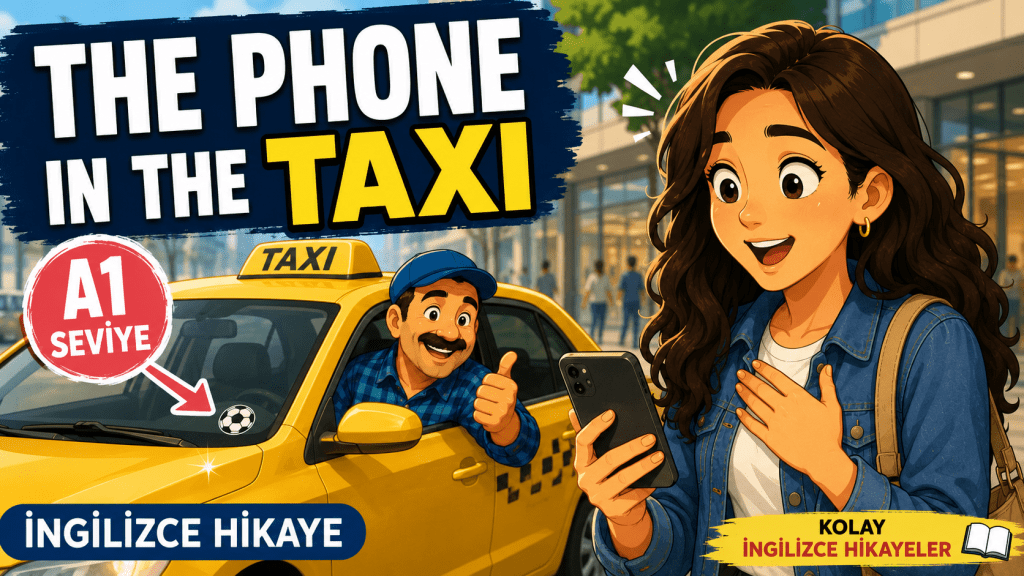
  • Taksideki Telefon

    Taksideki Telefon

    Hikayemizin sesli haline Kolay İngilizce Hikayeler Youtube Kanalından ya da Spotify’dan ulaşabilirsiniz.

    THE PHONE IN THE TAXI

    On Saturday morning, Deniz takes a taxi to a shopping mall. She wants to buy a birthday present for her sister. The traffic is busy, but the taxi driver is friendly. They talk about the sunny weather during the trip.

    When Deniz arrives at the mall, she pays the driver, says goodbye, and walks inside.

    About ten minutes later, she wants to call her sister.

    She opens her bag.

    She checks every pocket.

    Her phone is not there.

    “Oh no,” she says.

    She remembers the taxi.

    “My phone is in the taxi!”

    Deniz feels worried. She does not know the driver’s name or phone number. She only remembers that the taxi was yellow and very clean.

    She goes to the information desk.

    A young man smiles.

    “Can I help you?”

    “Yes, please,” Deniz says. “I left my phone in a taxi.”

    “Do you remember anything about the taxi?”

    “The driver had a blue cap,” she says. “And there was a small football sticker on the dashboard.”

    The young man smiles.

    “That helps.”

    He calls the local taxi office.

    About fifteen minutes later, his phone rings.

    “The driver has your phone,” he says.

    Deniz cannot believe it.

    Twenty minutes later, the same taxi arrives outside the mall.

    The driver gets out with a smile.

    “I think this is yours.”

    “Yes! Thank you so much!” Deniz says happily.

    The driver laughs.

    “You are lucky. The next passenger saw the phone and gave it to me.”

    Deniz thanks both the driver and the young man at the information desk.

    Before she leaves, she buys two small boxes of chocolate.

    She gives one to the taxi driver.

    “This is for you.”

    “You don’t have to,” he says.

    “I know,” Deniz replies, “but I want to.”

    On her way home, Deniz thinks about her day.

    She almost lost her phone, but she also met honest and kind people.

    Sometimes, one small problem reminds us that good people are everywhere.

    📚 Vocabulary

    WordTürkçesiExample Sentence
    taxitaksiI take a taxi to work. (İşe taksiyle giderim.)
    shopping mallalışveriş merkeziWe are at the shopping mall. (Alışveriş merkezindeyiz.)
    presenthediyeThis present is for my mother. (Bu hediye annem için.)
    traffictrafikThe traffic is very busy today. (Bugün trafik çok yoğun.)
    pocketcepMy keys are in my pocket. (Anahtarlarım cebimde.)
    worriedendişeliShe looks worried. (Endişeli görünüyor.)
    information deskbilgi masasıPlease go to the information desk. (Lütfen bilgi masasına gidin.)
    driverşoförThe driver is very friendly. (Şoför çok arkadaş canlısı.)
    dashboardön panel (arabanın)The phone is on the dashboard. (Telefon ön panelde.)
    stickerçıkartmaI have a football sticker. (Bir futbol çıkartmam var.)
    luckyşanslıYou are very lucky today. (Bugün çok şanslısın.)
    passengeryolcuThe passenger found the phone. (Yolcu telefonu buldu.)
    honestdürüstHe is an honest man. (O dürüst bir adamdır.)
    kindnazikShe is always kind to everyone. (Herkese karşı her zaman naziktir.)
    chocolateçikolataShe buys a box of chocolate. (Bir kutu çikolata alır.)

    Exercise 1 – Match the Words

    Eşleştirin.

    AB
    1. Taxia. Dürüst
    2. Driverb. Trafik
    3. Trafficc. Taksi
    4. Honestd. Şoför
    5. Chocolatee. Çikolata

    Exercise 2 – Fill in the Blanks

    Kelimeleri kullanarak boşlukları doldurun.

    (driver – taxi – worried – phone – chocolate)

    1. Deniz leaves her __________ in the taxi.
    2. The __________ is friendly.
    3. Deniz feels __________ when she cannot find her phone.
    4. The yellow __________ comes back to the mall.
    5. Deniz buys a box of __________.

    Exercise 3 – True or False

    Doğruysa True, yanlışsa False yazın.

    1. Deniz goes to the shopping mall by bus. ________
    2. She loses her phone in the taxi. ________
    3. The taxi driver keeps the phone. ________
    4. Another passenger gives the phone to the driver. ________
    5. Deniz buys flowers for the driver. ________

    Exercise 4 – Answer the Questions

    Soruları İngilizce cevaplayın.

    1. Why does Deniz go to the shopping mall?

    1. Where does Deniz leave her phone?

    1. Who helps Deniz?

    1. What does the driver have on the dashboard?

    1. What gift does Deniz give to the taxi driver?


    Exercise 5 – Put the Story in Order

    Cümleleri doğru sıraya koyun.

    ⬜ Deniz goes to the information desk.

    ⬜ The taxi driver brings the phone back.

    ⬜ Deniz gets into a taxi.

    ⬜ Deniz buys chocolate.

    ⬜ Deniz cannot find her phone.


    Exercise 6 – English to Turkish

    Türkçeye çevirin.

    1. I left my phone in a taxi.

    1. The driver is very friendly.

    1. The next passenger found the phone.

    1. You are very lucky.

    1. Good people are everywhere.


    Exercise 7 – Turkish to English

    İngilizceye çevirin.

    1. Telefonum takside.

    1. Şoför mavi bir şapka takıyordu.

    1. Bilgi masasına gittim.

    1. Çok teşekkür ederim.

    1. Bir kutu çikolata aldım.


    💡 Discussion Questions

    1. Have you ever lost your phone or wallet?
    2. What would you do if you found someone’s phone?
    3. Do you think most people are honest? Why?

    ✅ Answer Key

    Exercise 1

    1-c

    2-d

    3-b

    4-a

    5-e

    Exercise 2

    1. phone
    2. driver
    3. worried
    4. taxi
    5. chocolate

    Exercise 3

    1. False
    2. True
    3. False
    4. True
    5. False

    Exercise 4 (Sample Answers)

    1. She wants to buy a birthday present for her sister.
    2. She leaves it in the taxi.
    3. The young man at the information desk and the taxi driver help her.
    4. A small football sticker.
    5. A box of chocolate.

    Exercise 5

    1. Deniz gets into a taxi.
    2. Deniz cannot find her phone.
    3. Deniz goes to the information desk.
    4. The taxi driver brings the phone back.
    5. Deniz buys chocolate.

    Exercise 6

    1. Telefonumu takside unuttum.
    2. Şoför çok arkadaş canlısı.
    3. Bir sonraki yolcu telefonu buldu.
    4. Çok şanslısın.
    5. İyi insanlar her yerdedir.

    Exercise 7

    1. My phone is in the taxi.
    2. The driver had a blue cap.
    3. I went to the information desk.
    4. Thank you very much.
    5. I bought a box of chocolate.

    A1 Seviyesindeki Tüm Hikayeleri Ziyaret Edin.

  • Büyük Ailem

    Büyük Ailem

    Hikayemizin sesli haline Kolay İngilizce Hikayeler Youtube Kanalından ya da Spotify’dan ulaşabilirsiniz.

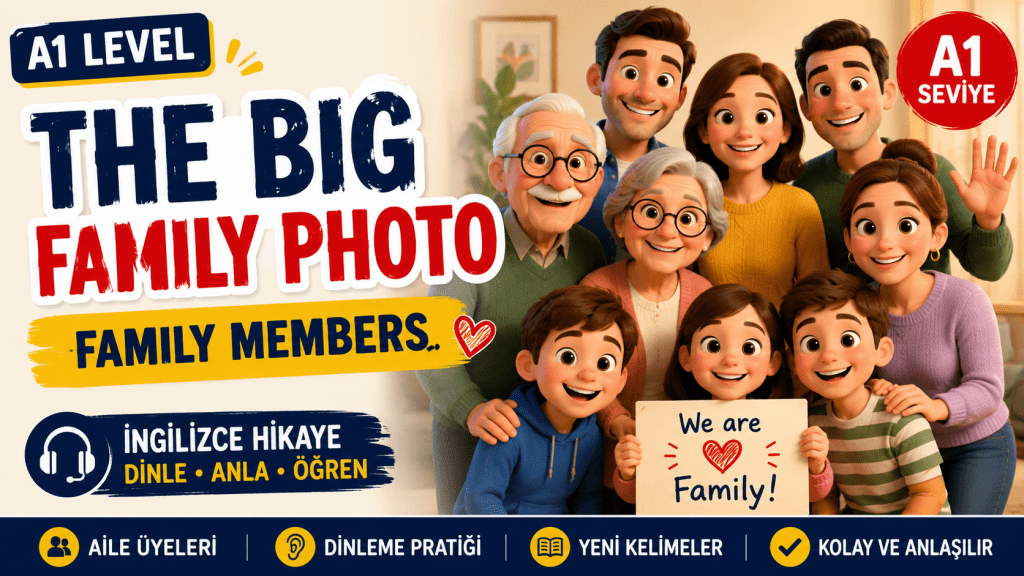
    The Big Family Photo

    Today is a special day for Eren. His whole family is coming to his grandparents’ house. They want to take a big family photo.

    Eren is very excited.

    His grandmother opens the door.

    “Welcome!” she says.

    Eren gives her a hug.

    “Hello, Grandma!”

    His grandfather is in the garden.

    “Hi, Grandpa!” Eren says.

    His grandfather smiles.

    “It is good to see you.”


    Soon, more people arrive.

    A blue car stops in front of the house.

    “Look!” Eren says. “My uncle is here!”

    His uncle gets out of the car.

    “Hello, everyone!”

    Next to him is Eren’s aunt.

    She is carrying a big chocolate cake.

    “I made this for today,” she says.

    “Thank you, Aunt Aylin!” Eren says happily.

    Then two children jump out of the car.

    “They are my cousins,” Eren says proudly.

    “This is my cousin Deniz. He is ten years old.”

    “And this is my cousin Elif. She is seven.”

    Deniz loves football.

    Elif loves drawing pictures.


    Everyone goes inside the house.

    Eren’s mother is making tea in the kitchen.

    His father is helping Grandpa in the garden.

    His aunt cuts the cake.

    His uncle tells funny stories.

    Everyone laughs.

    Eren feels happy.

    “I have a big family,” he says.


    After lunch, Grandma brings an old photo album.

    “There are many family photos here,” she says.

    Eren looks at the pictures.

    “This is my mother when she was a little girl.”

    “This is my father when he was a student.”

    “This is Uncle Ahmet.”

    “This is Aunt Aylin.”

    “There are my grandparents!”

    Eren smiles.

    “They all look so young!”

    Grandpa laughs.

    “Time goes very fast.”


    Suddenly, Grandma has an idea.

    “Now it is time for a new family photo!”

    Everyone goes into the garden.

    Grandpa puts the camera on a chair.

    The camera has a timer.

    “Hurry!” he says.

    Everyone stands together.

    Grandma and Grandpa stand in the middle.

    Eren stands between his two cousins.

    His mother and father stand behind him.

    His aunt and uncle smile at the camera.

    “Ready?” Grandpa asks.

    “Yes!” everyone answers.

    Click!

    The camera takes the picture.

    Eren looks at the photo.

    He smiles.

    “This is my family,” he says proudly.

    “My grandparents, my parents, my aunt, my uncle, my cousins, and me.”

    Grandma puts her arm around him.

    “A family is full of love,” she says.

    Eren nods.

    “I am lucky,” he says. “I have a wonderful family.”

    📚 Vocabulary

    WordTurkish
    specialözel
    excitedheyecanlı
    photo albumfotoğraf albümü
    gardenbahçe
    proudlygururla
    carefullydikkatlice
    younggenç
    laughgülmek
    timerzamanlayıcı
    luckyşanslı

    👨‍👩‍👧‍👦 Family Members Vocabulary

    EnglishTürkçe
    FamilyAile
    MotherAnne
    FatherBaba
    ParentsAnne ve baba / Ebeveynler
    BrotherErkek kardeş
    SisterKız kardeş
    SiblingKardeş (cinsiyet belirtmez)
    SonOğul
    DaughterKız evlat
    ChildÇocuk
    ChildrenÇocuklar
    BabyBebek
    Grandmother (Grandma)Büyükanne (Anneanne/Babaanne)
    Grandfather (Grandpa)Büyükbaba (Dede)
    GrandparentsBüyükanne ve büyükbaba
    GrandsonErkek torun
    GranddaughterKız torun
    GrandchildTorun
    AuntHala / Teyze / Yenge
    UncleAmca / Dayı / Enişte
    CousinKuzen
    NephewErkek yeğen
    NieceKız yeğen
    HusbandKoca / Eş
    WifeKarı / Eş
    RelativeAkraba
    StepmotherÜvey anne
    StepfatherÜvey baba
    Foster motherKoruyucu anne
    Foster fatherKoruyucu baba

    ✍️ Exercise 1 – Match the Words

    Match the English words with their Turkish meanings.

    EnglishTurkish
    1. speciala. dikkatlice
    2. excitedb. genç
    3. proudlyc. bahçe
    4. carefullyd. gururla
    5. gardene. özel
    6. youngf. zamanlayıcı
    7. timerg. fotoğraf albümü
    8. photo albumh. gülmek
    9. laughı. şanslı
    10. luckyi. heyecanlı

    ✍️ Exercise 2 – Fill in the Blanks

    Choose the correct word.

    (grandparents – cake – football – garden – cousins – photo album – tea – camera – lucky – stories)

    1. Grandma brings an old __________.
    2. Eren’s father helps Grandpa in the __________.
    3. Aunt Aylin brings a chocolate __________.
    4. Deniz loves playing __________.
    5. Eren has two __________.
    6. Eren’s mother makes __________.
    7. Grandpa puts the __________ on a chair.
    8. Uncle Ahmet tells funny __________.
    9. Eren feels __________ because he has a wonderful family.
    10. Eren visits his __________.

    ✍️ Exercise 3 – True or False

    Write True or False.

    1. Eren visits his grandparents. _______
    2. His aunt brings a chocolate cake. _______
    3. Deniz loves drawing pictures. _______
    4. Elif loves football. _______
    5. Grandpa works in the garden. _______
    6. Grandma brings an old photo album. _______
    7. The family takes a new family photo. _______
    8. Eren is unhappy at the end of the story. _______

    ✍️ Exercise 4 – Answer the Questions

    Answer the questions in complete sentences.

    1. Where does Eren go?
    2. Who makes tea?
    3. What does Aunt Aylin bring?
    4. What does Deniz love?
    5. What does Elif love?
    6. What does Grandma bring after lunch?
    7. Where does the family take a photo?
    8. Why is Eren happy?

    ✍️ Exercise 5 – Complete the Sentences

    Complete the sentences.

    1. Eren visits his __________________.
    2. Grandpa works in the __________________.
    3. Aunt Aylin makes a __________________ cake.
    4. Deniz loves __________________.
    5. Elif loves __________________.
    6. Grandma has an old __________________.
    7. The family goes into the __________________.
    8. Grandpa puts the camera on a __________________.
    9. The camera has a __________________.
    10. Eren says, “I have a wonderful __________________.”

    ✍️ Exercise 6 – Unscramble the Words

    Put the letters in the correct order.

    1. htemor → __________
    2. fhtaer → __________
    3. ragnmda → __________
    4. nelcu → __________
    5. ntua → __________
    6. snicou → __________
    7. dargen → __________
    8. hotop → __________
    9. mlabiu → __________
    10. ykcul → __________

    ✍️ Exercise 7 – Write About Your Family

    Answer the questions.

    1. How many people are there in your family?
    2. Do you have any brothers or sisters?
    3. Who is the oldest person in your family?
    4. Do you visit your grandparents?
    5. What do you like to do with your family?

    ✅ Answer Key

    Exercise 1

    1-e
    2-i
    3-d
    4-a
    5-c
    6-b
    7-f
    8-g
    9-h
    10-ı


    Exercise 2

    1. photo album
    2. garden
    3. cake
    4. football
    5. cousins
    6. tea
    7. camera
    8. stories
    9. lucky
    10. grandparents

    Exercise 3

    1. True
    2. True
    3. False
    4. False
    5. True
    6. True
    7. True
    8. False

    Exercise 4 (Sample Answers)

    1. He goes to his grandparents’ house.
    2. Eren’s mother makes tea.
    3. She brings a chocolate cake.
    4. He loves football.
    5. She loves drawing pictures.
    6. She brings an old photo album.
    7. They take a photo in the garden.
    8. Because he has a wonderful family.

    Exercise 5

    1. grandparents
    2. garden
    3. chocolate
    4. football
    5. drawing pictures
    6. photo album
    7. garden
    8. chair
    9. timer
    10. family

    Exercise 6

    1. mother
    2. father
    3. grandma
    4. uncle
    5. aunt
    6. cousin
    7. garden
    8. photo
    9. album
    10. lucky

    A1 Seviyesindeki Tüm Hikayeleri Ziyaret Edin 😇

  • Elektrik Kesintisi!

    Elektrik Kesintisi!

    Hikayemizin sesli haline Kolay İngilizce Hikayeler Youtube Kanalından ya da Spotify’dan ulaşabilirsiniz.

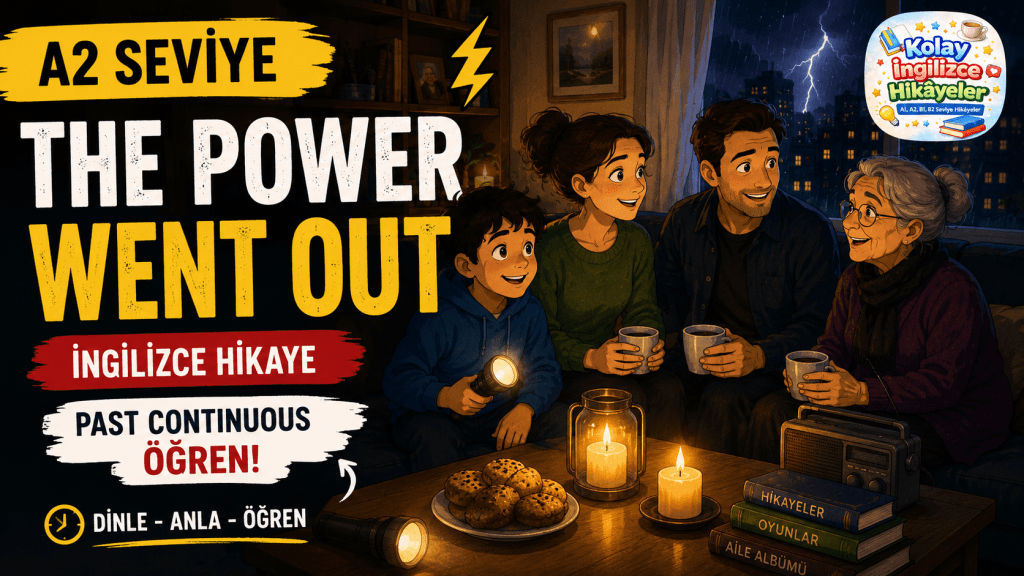
    The Power Went Out

    It was a rainy Friday evening in Istanbul. Dark clouds were covering the sky, and strong wind was blowing through the streets. Most people were hurrying home after work because they did not want to get wet.

    Murat was driving home from his office. He was listening to the radio while the rain was hitting the windows of his car. Traffic was moving slowly because many drivers were being careful on the wet roads. At the same time, his wife, Elif, was preparing dinner at home. She was cooking tomato soup, and delicious smells were filling the kitchen. Their ten-year-old son, Can, was sitting in the living room. He was doing his homework while his favorite music was playing quietly in the background.

    Everything seemed normal.

    Suddenly, there was a loud sound outside. A bright flash of lightning lit up the sky, and a few seconds later, the electricity went out. The whole apartment became dark.

    “Oh no!” Can shouted.

    Elif looked around the kitchen. She could not see anything. She was trying to find her phone, but it was difficult in the dark. At the same time, Murat was still driving. The traffic lights were no longer working, and the streets were becoming more crowded. Some drivers were honking because nobody knew whose turn it was to go.

    Murat called Elif.

    “Are you all right?”

    “Yes, we’re fine,” she answered.

    “The power went out a minute ago.”

    “I’m on my way home. Be careful.”

    “We will.”

    After the call, Elif found a flashlight in the kitchen drawer. While she was looking for candles, Can was standing near the window and watching the heavy rain. The whole neighborhood looked different without electricity. Some people were talking outside, while others were using the flashlights on their phones.

    A few minutes later, someone knocked on the apartment door.

    It was their elderly neighbor, Mrs. Aylin.

    “I wanted to check if you were okay,” she said with a smile. “I have some extra candles if you need them.”

    “Thank you very much,” Elif replied. “That’s very kind of you.”

    While they were talking, Can brought another chair for Mrs. Aylin. Soon, they were sitting together in the living room. Since there was no television or internet, they started chatting instead.

    Mrs. Aylin told funny stories about her childhood.

    “When I was young,” she said, “power cuts happened much more often. We didn’t have smartphones or tablets. We played games, told stories, and spent time together.”

    Can smiled.

    “That actually sounds fun.”

    About twenty minutes later, Murat finally arrived home. He was carrying a small bag from the bakery.

    “I thought we might need something sweet,” he said.

    Inside the bag were fresh pastries. Everyone laughed happily. They were eating pastries and drinking hot tea while the rain was continuing outside. The apartment felt warm even without electricity.

    Can looked around the room.

    “I think this is better than watching TV,” he said.

    His parents smiled.

    Just then, the lights suddenly came back on. The television turned on by itself, and the internet router started blinking again.

    “Finally!” Murat said.

    But nobody reached for the remote control.

    Instead, they continued talking and laughing together for another hour. They realized something important that evening. Sometimes, when technology stops working, people start connecting with each other again.

    When Can went to bed that night, he thought about the evening.

    The power outage had been unexpected, but it had also given his family something special: time together.

    Sometimes, a small problem can create a wonderful memory.

    .


    📚 Vocabulary

    EnglishTurkishExample Sentence
    power outageelektrik kesintisiThe power outage lasted for two hours.
    lightningşimşekA bright lightning lit up the sky.
    thundergök gürültüsüWe heard loud thunder during the storm.
    flashlightel feneriShe found a flashlight in the kitchen drawer.
    candlemumThey lit a candle because it was dark.
    crowdedkalabalıkThe streets became crowded after work.
    honkkorna çalmakSome drivers started to honk loudly.
    neighborhoodmahalleThe whole neighborhood was dark.
    bakeryfırınDeniz bought fresh pastries from the bakery.
    pastrypoğaça / hamur işiWe ate warm pastries with tea.
    routermodem / yönlendiriciThe internet router started blinking again.
    connectbağ kurmakStories help people connect with each other.
    unexpectedbeklenmedikThe power outage was unexpected.
    memoryanıIt became a wonderful family memory.
    continuedevam etmekThey continued talking for another hour.

    📝 Comprehension Questions

    1. Why was the traffic moving slowly?
    2. What was Elif cooking before the electricity went out?
    3. What was Can doing in the living room?
    4. Why couldn’t Elif find her phone easily?
    5. Who came to visit the family during the power outage?
    6. What did Mrs. Aylin bring with her?
    7. What stories did Mrs. Aylin tell?
    8. What did Deniz buy from the bakery?
    9. Why didn’t the family watch TV after the electricity came back?
    10. What lesson did Can learn that evening?

    ✍️ Fill in the Blanks

    Choose the correct word.

    (power outage – flashlight – candles – bakery – traffic)

    1. Elif found a __________ in the kitchen drawer.
    2. Deniz stopped at the __________ on his way home.
    3. The __________ was moving very slowly because of the rain.
    4. Mrs. Aylin brought extra __________ for the family.
    5. The __________ made the whole apartment dark.

    Answers

    1. flashlight
    2. bakery
    3. traffic
    4. candles
    5. power outage

    🔄 Past Continuous Practice

    Complete the sentences with the correct form of the verb.

    1. Murat __________ (drive) home.
    2. Elif __________ (cook) tomato soup.
    3. Can __________ (do) his homework.
    4. The rain __________ (fall) heavily.
    5. People __________ (hurry) home after work.
    6. Some drivers __________ (honk) their horns.
    7. Mrs. Aylin __________ (tell) funny stories.
    8. The family __________ (drink) tea together.

    Answers

    1. was driving
    2. was cooking
    3. was doing
    4. was falling
    5. were hurrying
    6. were honking
    7. was telling
    8. were drinking

    🇹🇷 Translation Practice

    İngilizceye çevirin.

    1. Elektrikler aniden kesildi.
    2. Elif mutfakta akşam yemeği hazırlıyordu.
    3. Can pencerenin yanında duruyordu.
    4. Dışarıda şiddetli yağmur yağıyordu.
    5. Komşuları onlara mum getirdi.
    6. Hep birlikte sıcak çay içiyorlardı.
    7. Deniz eve dönerken fırına uğradı.
    8. Kimse kumandaya uzanmadı.
    9. Teknoloji bazen insanları birbirinden uzaklaştırır.
    10. Küçük bir sorun güzel bir anı yaratabilir.

    💬 Discussion Questions

    1. Have you ever experienced a power outage?
    2. What do you usually do when the electricity goes out?
    3. Would you enjoy spending an evening without your phone?
    4. Do you think technology brings families together or apart?
    5. What is your favorite family memory?

    ⭐ Useful Expressions from the Story

    • The power went out. → Elektrikler kesildi.
    • Are you all right? → İyi misin?
    • I’m on my way home. → Eve geliyorum.
    • Be careful. → Dikkatli ol.
    • That sounds fun. → Kulağa eğlenceli geliyor.
    • Thank you very much. → Çok teşekkür ederim.
    • That’s very kind of you. → Bu çok nazikçe.
    • Nobody reached for the remote control. → Hiç kimse kumandaya uzanmadı.
    • Time together is precious. → Birlikte geçirilen zaman değerlidir.
    • Sometimes, a small problem can create a wonderful memory. → Bazen küçük bir sorun harika bir anı yaratabilir.

    ✅ Comprehension Questions – Answer Key

    1. Why was the traffic moving slowly?
      → Because many drivers were being careful on the wet roads.
    2. What was Elif cooking before the electricity went out?
      → She was cooking tomato soup.
    3. What was Can doing in the living room?
      → He was doing his homework.
    4. Why couldn’t Elif find her phone easily?
      → Because it was dark after the power went out.
    5. Who came to visit the family during the power outage?
      → Their elderly neighbor, Mrs. Aylin.
    6. What did Mrs. Aylin bring with her?
      → She brought some extra candles.
    7. What stories did Mrs. Aylin tell?
      → She told funny stories about her childhood.
    8. What did Deniz buy from the bakery?
      → He bought fresh pastries.
    9. Why didn’t the family watch TV after the electricity came back?
      → Because they preferred talking and spending time together.
    10. What lesson did Can learn that evening?
      → He learned that sometimes a small problem can create a wonderful memory and that spending time together is important.

    ✅ Translation Practice – Sample Answers

    1. The power suddenly went out.
    2. Elif was preparing dinner in the kitchen.
    3. Can was standing near the window.
    4. It was raining heavily outside.
    5. Their neighbor brought them candles.
    6. They were drinking hot tea together.
    7. Deniz stopped at the bakery on his way home.
    8. Nobody reached for the remote control.
    9. Technology sometimes keeps people apart.
    10. A small problem can create a wonderful memory.

    A2 Seviyesindeki Tüm Hikayeleri Ziyaret Edin 😇

  • Yeni Öğrenci

    Yeni Öğrenci

    Hikayemizin sesli haline Kolay İngilizce Hikayeler Youtube Kanalından ya da Spotify’dan ulaşabilirsiniz.

    The New Student

    Monday morning is different at Yeşiltepe School. There is a new student in Class 5A. All the students look at the classroom door. Who is the new student?

    The teacher smiles and opens the door. A girl walks into the classroom with a small backpack. She looks a little nervous, but she smiles.

    “Good morning, everyone,” the teacher says. “This is Merve. She is our new student.”

    Merve waves and says, “Hello. Nice to meet you.”

    The students smile back. Some students wave. One boy sits very quietly near the window. His name is Can.

    The teacher looks at Can.

    “Can, this seat is empty. Merve, you are next to Can.”

    Merve walks to her new desk.

    “Hi,” Can says softly.

    “Hi,” Merve answers.

    “I am Can.”

    “I am Merve.”

    The lesson begins. Merve opens her notebook. Can sees a small sticker on the notebook. It is a little blue bird.

    “That bird is cute,” Can says.

    “Thank you,” Merve replies.

    During the break, the classroom becomes noisy. Some students play games. Others talk with friends.

    Merve sits alone for a moment.

    Ayşe walks over with a big smile.

    “Hi! I am Ayşe.”

    “I am Merve.”

    “Are you okay?”

    “Yes, thank you.”

    Ayşe smiles.

    “Come with me.”

    Merve stands up and follows her.

    Merve looks at the classroom walls. There are colorful pictures and student projects everywhere.

    Ayşe points to a picture on the wall.

    “That is our class photo.”

    Merve looks carefully.

    “You all look happy.”

    Can smiles for the first time.

    “We are happy… and a little noisy.”

    Everyone laughs.

    Merve laughs too.

    The lunch bell rings. Merve opens her lunch box. It is small.

    Ayşe says, “I have two sandwiches. One is for you.”

    “Really?” Merve asks.

    “Of course!” Ayşe says with a smile.

    The four friends sit together. They talk about school, music, football, and their favorite foods.

    Merve is not nervous anymore.

    She feels at home.

    When the school day ends, Merve waves goodbye.

    “See you tomorrow!” she says.

    “See you, Merve!” everyone answers.

    Merve goes home after school.

    She smiles and looks back at the school.

    “This is a good school,” she says.

    She is excited for tomorrow.

    📚 Vocabulary (20 Words)

    WordTurkishExample Sentence
    differentfarklıToday is different.
    studentöğrenciShe is a new student.
    classroomsınıfThe classroom is clean.
    teacheröğretmenThe teacher is kind.
    smilegülümsemekMerve smiles at everyone.
    nervousgerginI am nervous before exams.
    backpacksırt çantasıMy backpack is heavy.
    seatsıra, koltukThis seat is empty.
    notebookdefterMy notebook is blue.
    stickerçıkartmaI have a cat sticker.
    birdkuşThe little bird is blue.
    breakteneffüsWe play games during the break.
    projectprojeOur science project is ready.
    class photosınıf fotoğrafıThe class photo is on the wall.
    lunch boxyemek kutusuHer lunch box is small.
    sandwichsandviçI eat a sandwich for lunch.
    sharepaylaşmakFriends share their food.
    noisygürültülüThe classroom is noisy at break time.
    excitedheyecanlıI am excited for tomorrow.
    togetherbirlikteWe study together every day.

    💬 Useful Expressions

    ExpressionTurkish
    Nice to meet you.Tanıştığımıza memnun oldum.
    Are you okay?İyi misin?
    Thank you.Teşekkür ederim.
    Of course!Tabii ki!
    See you tomorrow!Yarın görüşürüz!

    📖 Reading Comprehension

    True or False

    1. Merve is a new teacher.
    2. Can sits near the window.
    3. Merve has a blue bird sticker.
    4. Ayşe shares her sandwiches.
    5. Merve is still nervous at the end of the story.

    Multiple Choice

    1. Where does Merve sit?

    A) Next to Ayşe

    B) Next to Can

    C) Next to the teacher


    1. What is on Merve’s notebook?

    A) A flower

    B) A cat

    C) A blue bird


    1. What does Ayşe show Merve?

    A) A football

    B) The class photo

    C) The library


    1. What does Ayşe give Merve?

    A) A notebook

    B) A sandwich

    C) A pencil


    1. How does Merve feel at the end?

    A) Sad

    B) Excited

    C) Angry


    ✍️ Fill in the Blanks

    Complete the sentences.

    1. Merve is a new __________.
    2. Can sits near the __________.
    3. The blue bird is on Merve’s __________.
    4. Ayşe has two __________.
    5. Merve goes __________ after school.
    6. The classroom becomes __________ during the break.
    7. The class photo is on the __________.
    8. Merve feels __________ for tomorrow.
    9. Can says the bird is __________.
    10. Ayşe is very __________.

    📝 Grammar Practice (To Be)

    Complete with am / is / are.

    1. I ___ Merve.
    2. She ___ a new student.
    3. We ___ classmates.
    4. They ___ happy.
    5. It ___ a blue bird.
    6. You ___ kind.
    7. He ___ Can.
    8. Ayşe and Merve ___ friends.
    9. The classroom ___ noisy.
    10. I ___ excited.

    🔄 Make Negative Sentences

    Rewrite the sentences.

    Example:

    She is nervous.

    ➡️ She isn’t nervous.

    1. Merve is a teacher.
    2. Can is angry.
    3. They are at home.
    4. The lunch box is big.
    5. We are late.

    ❓ Make Questions

    Write questions.

    Example:

    She is happy.

    ➡️ Is she happy?

    1. Merve is new.
    2. Can is quiet.
    3. They are friends.
    4. Ayşe is kind.
    5. The classroom is noisy.

    🗣️ Speaking Practice

    Answer these questions in English.

    1. What is your name?
    2. Are you a student?
    3. Is your classroom big?
    4. Who is your best friend?
    5. Are you shy when you meet new people?
    6. What is in your backpack?
    7. Do you like your classmates?
    8. What do you eat for lunch?
    9. What is your favorite subject?
    10. How do you feel on the first day of school?

    ✍️ Writing Practice

    Write 6–8 sentences about your first day at school.

    Try to answer these questions:

    • What is your name?
    • Are you a student?
    • Were you nervous?
    • Did you make a new friend?
    • Who was your first friend?
    • How did you feel at the end of the day?

    🎯 Challenge Yourself

    Write five sentences using am, is, and are.

    Example:

    • I am a student.
    • My teacher is kind.
    • We are friends.
    • My classroom is clean.
    • They are happy.

    ✅ Answer Key

    Reading

    1. False
    2. True
    3. True
    4. True
    5. False
    6. B
    7. C
    8. B
    9. B
    10. B

    Fill in the Blanks

    1. student
    2. window
    3. notebook
    4. sandwiches
    5. home
    6. noisy
    7. wall
    8. excited
    9. cute
    10. kind

    Grammar Practice

    1. am
    2. is
    3. are
    4. are
    5. is
    6. are
    7. is
    8. are
    9. is
    10. am

    A1 Seviyesindeki Tüm Hikayeleri Ziyaret Edin 😇

  • Ronaldo ile Tanışmak! ⚽

    Ronaldo ile Tanışmak! ⚽

    Hikayemizin sesli haline Kolay İngilizce Hikayeler Youtube Kanalından ya da Spotify’dan ulaşabilirsiniz.

    THE DAY I MET RONALDO

    Murat had loved football since he was a child. Every weekend, he watched matches with his father. They talked about their favorite teams, exciting goals, and famous players. But there was one player Murat admired more than anyone else: Cristiano Ronaldo.

    For years, Murat had one big dream. He wanted to watch a World Cup match in a real stadium and take a photo with Ronaldo.

    Many people told him it was only a dream.

    “You’ll probably never meet him,” his friends sometimes said.

    Murat only smiled.

    “Maybe. But I’ll never know if I don’t try.”

    To make his dream come true, Murat started saving money. He didn’t buy expensive shoes or the newest phone. Whenever he had some extra money, he put it into a small savings box. It took several years, but he never gave up.

    When the next World Cup finally arrived, Murat bought a match ticket and booked his flight. He was so excited that he could hardly sleep the night before his trip.

    As soon as he arrived in the host country, he could feel the excitement everywhere. The streets were full of football fans wearing different national team shirts. People were singing, waving flags, and taking photos together. Even strangers were talking to each other about football.

    On match day, Murat woke up early and put on his Portugal shirt. He checked his ticket three times before leaving the hotel. Then he took the metro to the stadium.

    The stadium was even bigger than he had imagined. Thousands of fans were already there. Some were eating, some were buying souvenirs, and others were taking selfies in front of the stadium.

    When the players came onto the pitch, everyone stood up and cheered.

    “There he is!” Murat said with a huge smile.

    For the first time in his life, he was watching Cristiano Ronaldo with his own eyes.

    The match was exciting from the first minute. Ronaldo played very well and scored an amazing goal. The crowd went crazy. Murat shouted, clapped, and celebrated with the fans around him. It didn’t matter where they came from. For ninety minutes, everyone felt like one big family.

    After the match, many fans waited near the players’ exit. Murat knew the players might leave quickly, but he decided to wait anyway.

    About half an hour later, several players came outside to greet the supporters.

    Then something unexpected happened.

    Murat couldn’t believe it when Ronaldo started walking toward him.

    His heart was beating so fast.

    When Ronaldo was only a few steps away, Murat smiled and held up his phone.

    “Hi, Cristiano,” he said. “Would it be okay if we took a photo together?”

    Ronaldo smiled.

    “Sure,” he said. “Come here.”

    Another fan kindly took the photo for them.

    “Thank you so much,” Murat said.

    “My pleasure,” Ronaldo replied. “Keep following your dreams.”

    On the flight home, Murat looked at the photo again and again. It wasn’t just a picture with his favorite football player. It reminded him that dreams don’t come true overnight. Sometimes they take years, hard work, and patience.

    When he got home, he printed the photo and put it on the wall above his desk.

    Every time he looked at it, he smiled.

    Some dreams really do come true if you never stop believing.

    Vocabulary

    EnglishTurkish
    admirehayran olmak
    dreamhayal
    save moneypara biriktirmek
    savings boxkumbara
    give upvazgeçmek
    arrivevarmak
    host countryev sahibi ülke
    supportertaraftar
    stadiumstadyum
    pitchfutbol sahası
    cheertezahürat yapmak
    score a goalgol atmak
    crowdkalabalık
    celebratekutlamak
    playeroyuncu
    greetselamlamak
    unexpectedbeklenmedik
    smilegülümsemek
    believeinanmak
    patiencesabır

    Useful Expressions

    • come true → gerçekleşmek
    • give up → vazgeçmek
    • watch a match → maç izlemek
    • take a photo → fotoğraf çekmek
    • save money → para biriktirmek
    • wait for someone → birini beklemek
    • look at something → bir şeye bakmak
    • hard work → sıkı çalışma
    • never stop believing → inanmaktan asla vazgeçmemek
    • for the first time → ilk kez

    Fill in the Blanks

    Complete the sentences with the correct words.

    (dream – stadium – smiled – supporters – saved – goal – photo – patience – flight – pitch)

    1. Murat ______ money for several years.
    2. His biggest ______ was to meet Ronaldo.
    3. The ______ was full of excited fans.
    4. Ronaldo scored an amazing ______.
    5. Thousands of ______ cheered during the match.
    6. Murat wanted to take a ______ with Ronaldo.
    7. The players came onto the ______.
    8. On the ______ home, Murat looked at the picture many times.
    9. Every time he saw the photo, he ______.
    10. Dreams need hard work and ______.

    True or False

    Write True or False.

    1. Murat didn’t like football.
    2. Murat saved money for many years.
    3. He bought an expensive phone instead of saving money.
    4. He watched the World Cup in a real stadium.
    5. Ronaldo scored a goal.
    6. Murat left the stadium immediately after the match.
    7. Ronaldo took a photo with Murat.
    8. Murat forgot about the photo after returning home.

    Reading Comprehension

    Answer the questions.

    1. Who did Murat usually watch football with?
    2. Why did Murat save money?
    3. What did Murat wear on match day?
    4. Why did Murat wait outside the stadium?
    5. What did Ronaldo say to Murat?
    6. Where did Murat put the photo after he got home?
    7. What lesson did Murat learn?
    8. Would you like to watch a World Cup match? Why or why not?

    Speaking Practice

    Answer the questions in English.

    1. Who is your favorite football player?
    2. Have you ever watched a football match in a stadium?
    3. What is your biggest dream?
    4. Are you good at saving money?
    5. If you met your favorite celebrity, what would you say?
    6. Which country would you like to visit for a football match?
    7. Do you like football? Why or why not?
    8. What dream are you working on right now?

    Translation

    Translate the sentences into English.

    1. Çocukluğumdan beri futbolu seviyorum.
    2. Bir gün Dünya Kupası’nı izlemek istiyorum.
    3. Hayallerim için para biriktiriyorum.
    4. Ronaldo ile fotoğraf çektirmek istiyorum.
    5. Maç çok heyecanlıydı.
    6. Taraftarlar çok yüksek sesle tezahürat yaptı.
    7. Asla hayallerinden vazgeçme.
    8. Sabır ve sıkı çalışma çok önemlidir.
    9. Eve döndüğümde fotoğrafı duvara astım.
    10. Bazı hayaller gerçekten gerçekleşir.

    Answer Key

    Fill in the Blanks

    1. saved
    2. dream
    3. stadium
    4. goal
    5. supporters
    6. photo
    7. pitch
    8. flight
    9. smiled
    10. patience

    True or False

    1. False
    2. True
    3. False
    4. True
    5. True
    6. False
    7. True
    8. False

    Translation Answers

    1. I have loved football since I was a child.
    2. I want to watch the World Cup one day.
    3. I am saving money for my dreams.
    4. I want to take a photo with Ronaldo.
    5. The match was very exciting.
    6. The supporters cheered very loudly.
    7. Never give up on your dreams.
    8. Patience and hard work are very important.
    9. When I got home, I put the photo on the wall.

    A2 Seviyesindeki Tüm Hikayeleri Ziyaret Edin 😇